



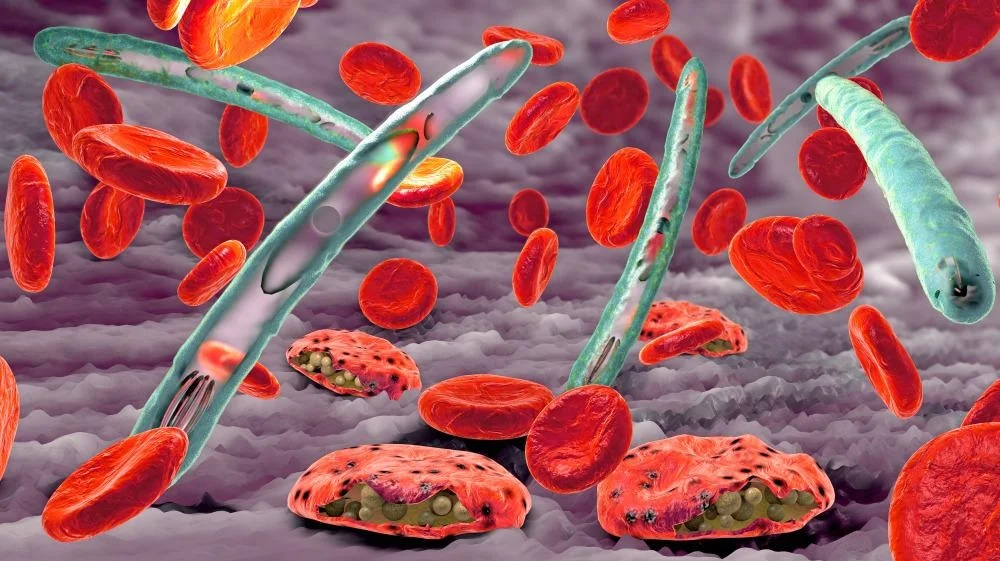
Malaria is a life-threatening disease caused by the Plasmodium parasite, which is transmitted to humans through the bite of infected female Anopheles mosquitoes. Despite significant advances in medical research and public health measures, malaria continues to pose a major global health challenge, particularly in tropical and subtropical regions. Understanding the complete lifecycle of the malaria parasite is crucial for developing effective prevention and treatment strategies. In this article, we will explore how the Plasmodium parasite spreads and infects humans, from mosquito transmission to human infection and back.
The Lifecycle of the Plasmodium Parasite
The lifecycle of the Plasmodium parasite involves two hosts: mosquitoes and humans. The parasite undergoes several stages of development in both hosts, with each stage playing a critical role in its transmission and infection process.
1. Mosquito Stage
Sporozoites:
The lifecycle of the Plasmodium parasite begins in the salivary glands of an infected female Anopheles mosquito. When the mosquito bites a human, it injects saliva containing sporozoites, the infective stage of the parasite, into the human bloodstream. Sporozoites are highly motile and quickly travel to the liver, where they invade liver cells (hepatocytes).
2. Liver Stage
Schizogony:
Inside the liver cells, sporozoites undergo a process called schizogony, where they multiply asexually to form thousands of merozoites. This stage is clinically silent, meaning it does not produce symptoms in the infected individual. After approximately 1-2 weeks, the liver cells burst, releasing merozoites into the bloodstream.
3. Blood Stage
Erythrocytic Cycle:
The released merozoites invade red blood cells (erythrocytes), where they continue to multiply asexually. Inside the red blood cells, the parasite develops through several stages: ring stage, trophozoite stage, and schizont stage. The schizonts eventually rupture the red blood cells, releasing new merozoites that can infect additional red blood cells. This cyclic process leads to the clinical symptoms of malaria, such as fever, chills, and anemia.
Formation of Gametocytes:
In addition to asexual reproduction, some merozoites differentiate into sexual forms called gametocytes (male and female). These gametocytes circulate in the bloodstream and are essential for the parasite’s transmission back to the mosquito.
4. Mosquito Stage (Revisited)
Gametocyte Uptake:
When an uninfected female Anopheles mosquito bites an infected human, it ingests gametocytes along with the blood meal. Inside the mosquito’s midgut, the gametocytes undergo fertilization to form zygotes. The zygotes develop into ookinetes, which penetrate the midgut wall and form oocysts.
Sporogony:
Within the oocysts, the parasite undergoes sporogony, a process of asexual multiplication that produces thousands of sporozoites. The oocysts eventually rupture, releasing sporozoites into the mosquito’s salivary glands. The mosquito is now ready to transmit the parasite to another human host, completing the lifecycle of the Plasmodium parasite.
The Impact of Malaria on Human Health
Malaria infection can range from mild to severe, with symptoms including fever, chills, headache, nausea, vomiting, and muscle aches. Severe malaria can lead to complications such as cerebral malaria, severe anemia, respiratory distress, and organ failure, which can be fatal if not treated promptly.
Prevention and Control Measures
Vector Control:
Controlling the mosquito vector is a critical component of malaria prevention. Measures such as the use of insecticide-treated bed nets (ITNs), indoor residual spraying (IRS), and eliminating mosquito breeding sites can significantly reduce the transmission of malaria.
Antimalarial Medications:
Antimalarial drugs are used for both treatment and prevention of malaria. Prompt treatment with effective antimalarial medications can prevent complications and reduce the spread of the parasite. Chemoprophylaxis, the use of antimalarial drugs to prevent infection, is recommended for travelers to malaria-endemic regions.
Vaccination:
Research efforts are ongoing to develop an effective malaria vaccine. The RTS,S/AS01 vaccine, also known as Mosquirix, has shown promise in reducing the incidence of malaria in young children and is being implemented in pilot programs in several African countries.
Conclusion
The lifecycle of the Plasmodium parasite is complex, involving multiple stages of development in both mosquitoes and humans. Understanding this lifecycle is essential for developing effective strategies to prevent and control malaria. Through a combination of vector control, antimalarial medications, and vaccination, significant progress can be made in reducing the global burden of malaria and ultimately eliminating this deadly disease.


