



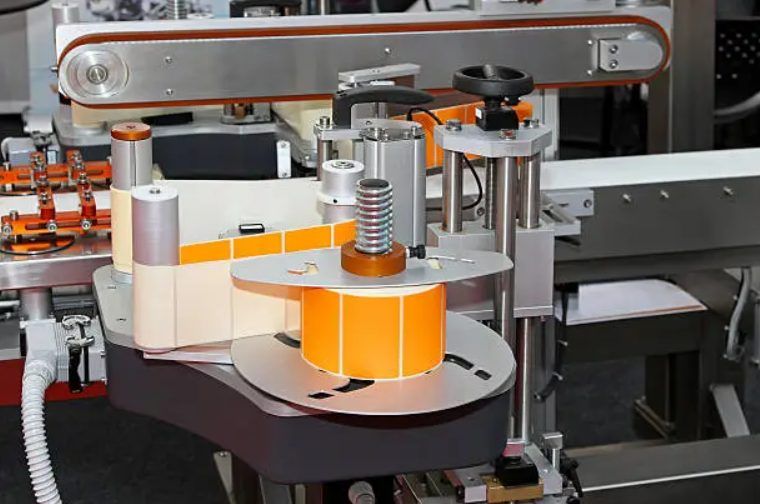
Label making machines are essential in the contemporary packaging sector. These devices assist businesses in producing top-notch labels appropriate for all products. As a prerequisite, label making machines provide accuracy, speed, and efficiency in their work. The growing demand for consumer goods, pharmaceuticals, and specialty products which require high-quality labels makes label making machines indispensable for big manufacturers. This article will elaborate on different types of label making machines and their functionalities. It will also discuss how businesses can take advantage of incorporating these machines into their production lines. Moreover, we will highlight some of the fantastic offers from KTETGROUP, which can assist your business in production.
KTETGROUP offers a broad variety of equipment, https://www.ketegroup.com/es/product-category/wine-capsule-machines/ such as wine capsule machines, for those looking to enhance the efficiency of their packaging line. With these machines, you can streamline your label production systems.
Describe Label Making Machine.
A label making machine is a device or motor that creates self-sticking labels for different products. This device can produce labels from a wide range of materials including paper, fabric, and plastic based on the requirements of the product being labeled. These machines are designed to print logos, designs, barcodes, and other pertinent information that is needed on a product’s packaging.
In food and beverages, pharmaceuticals, cosmetic industries and also consumer industries, these machines perform important branding, labeling and regulatory compliance functions. When it comes to business with high volume demand, these devices help streamline processes without limiting quality because they are built to function at high speeds with the least amount of errors.
Different Label Making Machines
We can divide label making machines into different types based on their purpose. For industrial use, let’s look at the most common machines used:
Digital Label Printers
Digital printers stand out as the most sophisticated label making machines. Digital printers offer great accuracy and variety Digital label printers do not require a printing plate, unlike traditional printers. Instead, it works directly from a computer file. Since they are easy to customize and change, businesses are able to quickly make custom designs without major financial setbacks.
Foods and beverages tend to require a lot of marketing through labels and advertisements. Digital printers are ideal for these industries since they require a lot of tailored promotions. Digital printers also stand out for printing on a variety of supplies and for creating high resolution outputs with bright colors. One major advantage of digital printers is their efficiency during short runs involving unique and personalized labels.
Flexographic Label Printing Machines
Flexographic printing machines are among the most widely utilized label printing machines for large scale production. These machines have flexible printing plates that are mounted on revolving cylinders. Flexographic printing is known for its high printing speed and ability to print on different materials such as plastic, foil, and paper. For this reason, it is greatly used by manufacturers needing large amounts of labels such as those in the beverages, automotive, and retail sectors.
Flexographic machines offer great versatility, allowing them to print on both narrow and wide web materials. These machines also support multi-color printing, making it an ideal solution for businesses that have sophisticated designs or need superior graphic printing.
Label Printers for Thermal Transfer Printing
Thermal transfer printers are capable of withstanding harsh conditions since heat is used to transfer ink from a ribbon to the label material. Hence, these printers are ideal for making labels that need to endure. They are widely used in industries where sustained quality of labels are essential such as logistics, inventory control, and product tracking.
Using thermal transfer printing processes ensures that the label withstands fading, smearing, or damage from water, oil, or chemical exposure. The printer type is appropriate for barcode and serial number printing, as well as other critical information that must remain readable over time.
Offset Label Printing Machines
Offset label printing machines are mostly used when there is a high volume of production runs and require consistent prints of good quality. They are a part of traditional printing where pre-made plates are inked and used to print on a variety of surfaces (substrates). These printers are able to deliver color precision and exactness to a very high level. Products with intricate logos and designs on them will need such machines.
Although providing high quality offset results, the printing is usually more costly compared to other methods like digital or flexographic printing because of the setup required. Thus, the ideal users of these types of printers are large scale businesses that deal with massive amounts of labels because of intense label volume justification and initial layer cost.
Roll-fed Labeling Machines
Machines that print labels from a roll are manufactured to work with label material in roll form. The label stock is printed on prior to cutting it into individual labels, which suits high speed label applications. Roll-fed machines are commonly used in the food and drink sector, personal care products, or even pharmaceuticals, where speedy labeling automation is crucial for mass manufactured goods.
Usually, these machines have automated systems for cutting, label application, and even adhesive application. This results in seamless labeling which minimizes idle time, expenses, and need for extensive manual labor.
How Label Making Machines Work
For any specific machine, the steps that make up label production will differ. Regardless, there is a universal flow of actions that most label making machines will follow:
1. Material Loading
As with any production process, the initial step entails the feeding of materials into the machine, and in this case, it would be the label material. The label material may consist of paper, textile, synthetic films or even plastic. It is usually put onto a spool which is then rotated through the machine for printing and cutting.
2. The Printing Stage
The machine is capable of printing a design, a logo, a barcode, or any other relevant product information directly onto the label material. How this is done, however, depends on the type of machine being used. In digital printing for instance, the design is executed through direct transfer from a digital file to the label material. In flexographic printing, the design is executed with the aid of a flexible printing plate.
3. Cutting the Labels
With the label printed, it is now ready to be cut into individual pieces. This can be achieved by die-cutting or laser cutting, depending on how detailed and precise the application is. Each label is the correct size and shape for its intended application.
4. Applying the Adhesive
In some label making machines the adhesive is applied to the back of the label as it moves through the machine. This is especially true with roll fed label making machines. The label is usually applied in a very thin and smooth manner so that the labels can be affixed to the product packaging with ease.
5. Finishing
The last part of the process is to put on finishing details like coatings or protective layers such as lamination, which add protection against abrasions. Afterward, the labels can be stacked or wound onto reels for easy storage and later use.
Advantages of Label Making Machines
Purchasing a machine for label making comes with numerous benefits, particularly for businesses that depend on good quality and precision when it comes to labeling their products. Some of the advantages are:
1. High-Speed Production
Label making machines are mechanized to operate at high speed, enabling companies to quickly met their label demand. In sectors where throughput is vital like food and beverage, cosmetics, and even pharmaceuticals, this feature is very useful.
2. Cost Savings
Cost of operation is reduced tremendously with automated labeling as the amount of labor needed is reduced and so are the chances of making mistakes. With Label making machines, there is also less waste of materials as the labels produced are exact and uniform.
3. Customization and Flexibility
Digital label printing and other label making machines enable easy customization of product labels with varying graphics, color schemes, and product details. This is very beneficial for companies that market a diverse range of products or run seasonal campaigns because they can quickly alter label designs without the necessity of new printing plates.
4. Consistent Quality
Labeling machines maintain constant quality for every printed label which minimizes defects or variations from label to label. This is crucial from the standpoint of brand image as consumers must be provided with accurate product information and details without any inconsistencies.
5. Improved Efficiency
Labeling is simplified with the incorporation of automated label making machines which eliminate unproductive time to improve overall efficiency for the company. In this case, with a lesser amount of manual work, more business functions can be worked on while the machine does the labeling.
Industries That Benefit from Label Making Machines
Label making machines are utilized across different sectors including:
- Food and Beverage: Used for labeling products such as bottled drinks, canned goods, and packaged snacks.
- Pharmaceuticals: For creating dosage instruction labels, expiration dates and other regulatory information.
- Cosmetics and Personal Care: For labeling skincare, shampoo, and lotion products like watches or any other activities performed for or to a person.
- Retail and Consumer Goods: For clothing and even electronics, offering marking and labeling solutions for retail and consumer goods.
- Wine and Spirits: Businesses can go so far as to use specialized devices like wine capsule machines to manufacture capsules for bottle closure.
Conclusion
From my perspective, wine capsule machines serve to add value to the production line. It streamlines the whole procedure for the companies. Labeling machines are crucial components of contemporary manufacturing processes. From my standpoint, labeling machines make everything easier for businesses. Such technologies provide flexibility and can be utilized across multiple industries. KTETGROUP is one of those pioneering companies that enhances industry production with advanced wine capsule machines. So, Using labeling machines, companies can produce labels more quickly and with better quality than before.


