



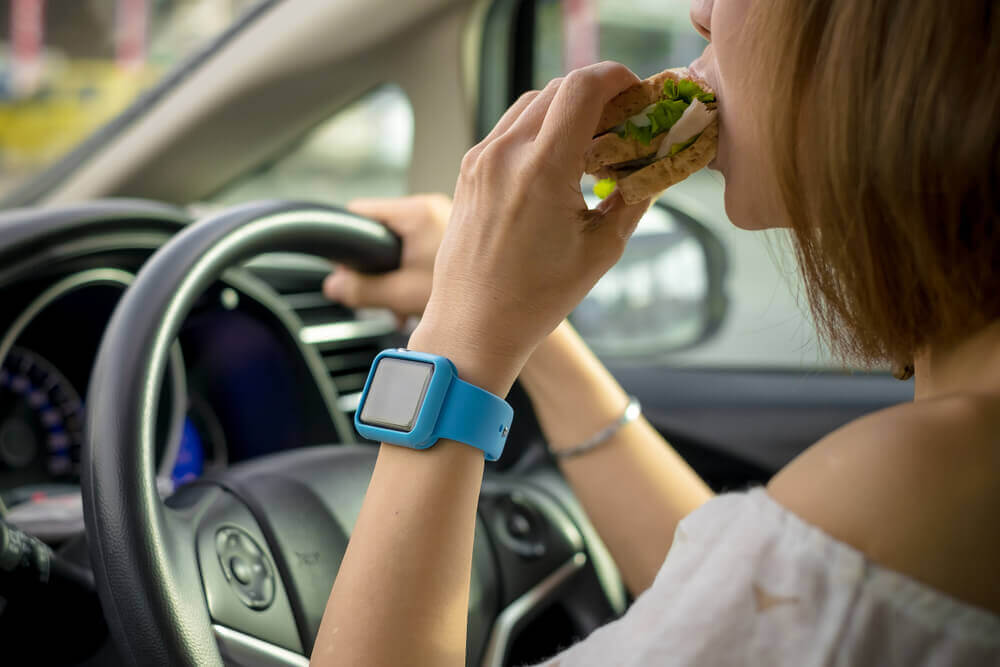
In today’s bustling world, it’s not uncommon for drivers to grab a quick meal while on the go. While it is illegal to eat and drive, and there may not be specific laws against it in many places, this habit can sometimes lead to tricky situations. Keeping safety in mind is important to avoid accidents and any potential legal issues. By understanding the risks of distractions like eating while driving, we can all make sure to prioritize safety and make smarter choices behind the wheel.
The Connection Between Eating and Distracted Driving
Distracted driving is a leading factor in road accidents, frequently associated with texting or phone calls. Yet, eating while driving presents another serious but often underestimated distraction. When drivers manage food, open wrappers, or address spills, their concentration diverts from the road, resulting in slower reaction times. A brief loss of focus can prove hazardous, heightening the risk of crashes.
Although eating and driving aren’t specifically prohibited in many areas, they can lead to penalties. If law enforcement believes eating has contributed to unsafe driving, they might issue citations for reckless or careless behavior. Moreover, unexpected spills or the urgency to retrieve a fallen item can lead to sudden movements, causing a loss of control. To promote road safety, drivers must focus on driving and avoid distractions, including eating, while operating a vehicle.
How Different States Handle Eating and Driving
The legal stance on eating while driving varies across provinces and territories. Some jurisdictions have stringent distracted driving laws encompassing any non-driving activity diverting attention from the road. Officers can still issue tickets under broader reckless driving laws in regions where eating while driving is not explicitly prohibited. Certain provinces have enacted specific statutes against distracted driving, including eating as a contributing factor to accidents. It’s always advisable to check local traffic laws to stay informed and avoid penalties.
The Risks of Eating While Driving
Eating while driving is a form of distracted driving that can lead to accidents and legal issues. Here are some major risks:
Reduced Reaction Time: Handling food occupies hands that should be on the wheel, delaying responses to sudden obstacles or traffic changes. Slower reaction times increase the risk of collisions.
Spilled Drinks and Food: Unexpected spills can startle drivers, leading to abrupt movements that may cause loss of vehicle control. Such distractions increase the likelihood of accidents, especially in high-speed traffic.
Cognitive Distraction: Focusing on eating rather than the road reduces situational awareness, making it difficult to react to sudden hazards or changes in traffic. This impairs decision-making and endangers both the driver and others.
Increased Accident Likelihood: Studies indicate that drivers who eat while driving are significantly more likely to be involved in collisions. Inattention and slower reaction times make them prone to accidents that could have been avoided.
By avoiding distractions like eating, drivers can maintain full control of their vehicles and reduce the chances of accidents.
Best Practices for Safe Driving
Eliminating distractions is essential for safe driving. Eating while driving can impair focus, reaction time, and vehicle control. By following key best practices, drivers can minimize risks, prevent accidents, and ensure their full attention remains on the road.
Eat Before or After Driving: Planning meals ahead of time eliminates the temptation to multitask, allowing drivers to stay fully focused on the road and avoid distractions caused by food handling.
Pull Over If Necessary: If eating while on the road is unavoidable, finding a safe place to stop ensures that drivers are not distracted while handling food, reducing the chances of accidents.
Choose Less Messy Foods: If eating cannot be avoided, selecting simple, easy-to-handle foods minimizes distractions, prevents spills, and helps drivers maintain control of the vehicle while keeping attention on the road.
Keep Your Vehicle Organized: Securing food items and drinks properly prevents unexpected spills and distractions, ensuring drivers remain focused and respond quickly to potential road hazards.
Stay Informed on Local Laws. Knowing state-specific distracted driving regulations can help drivers avoid fines, penalties, and potential legal issues related to unsafe driving behaviors.
Conclusion
It is not legal to eat and drive and may not always be explicitly prohibited, and it remains a risky practice that can lead to accidents and legal consequences. At Catania and Catania, they urge drivers to prioritize safety over convenience and remain fully attentive behind the wheel. Eliminating distractions, including eating, can prevent accidents, protect lives, and keep the roads safer for everyone. Before reaching for that meal while driving, consider the potential dangers and make the responsible choice.


