



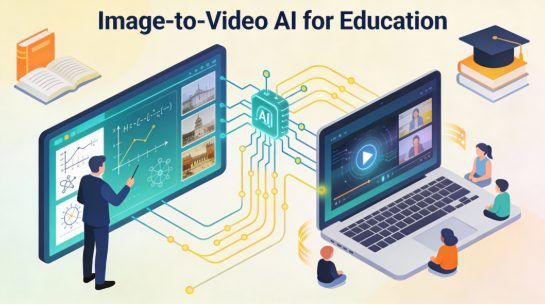
Education in 2026 is being transformed by video and AI, with schools, universities, and corporate learning teams shifting from text‑heavy materials to rich, visual experiences. Research reports show that video‑based learning significantly improves engagement and knowledge retention compared with traditional text‑only instruction.
Why Video (and AI) Matter So Much in Learning
Studies compiled in 2025 found that learners retain up to 95% of information delivered in video compared with around 10% from text alone. eLearning research also reports that digital and microlearning approaches can raise retention rates to 25–60% and dramatically increase course completion compared to conventional classroom methods.
At the same time, AI is making it easier to design and structure effective educational videos. AI helpers can suggest lesson structures, segment content, and make complex topics more dynamic without requiring teachers to become professional video producers. The result is a powerful combination: pedagogy guided by educators and production powered by AI.
From Slides to Story: Image-to-Video in the Classroom
One of the most accessible upgrades for teachers is turning static materials into short, animated explanations. A single diagram, historical photo, or process graphic can be converted into a short clip with camera movement, highlights, and voiceover, making it more memorable for students.
Arting’s Image to Video AI is designed for exactly this kind of lightweight creation: it allows users to upload images, describe the motion or effect they want, and generate watermark‑free videos in the browser with no login. This is particularly useful for educators who need quick visual assets for slides, LMS modules, or flipped‑classroom content but lack time or editing skills.
VideoPlus’s Image to Video AI takes a more “studio‑style” approach that suits instructional designers and schools building larger video libraries. It supports AI image‑to‑video conversion, text‑to‑video, multi‑scene synthesis, and industry‑specific templates, including presets tailored for education and tutorials. This makes it easier to turn lesson scripts or course outlines into structured, multi‑scene videos rather than isolated clips.
Benefits for Students: Attention, Accessibility, and Active Learning
AI‑supported educational video goes beyond passive watching. Platforms described in 2025–2026 can automatically generate chapters, segments, and interactive activities such as in‑video quizzes, which keep learners active and help them navigate large video libraries. Smart indexing lets a student jump directly to the part of a video that covers a specific formula, concept, or example, reducing frustration and time wasted searching.
Data from learning and development reports shows that video‑based “edutainment” (educational entertainment) can deliver 5–10x better engagement and retention than traditional, text‑centric approaches. AI video tools also support captions, multiple languages, and variable playback speeds, making content more accessible for diverse learners and global classrooms.
How Teachers and Instructional Designers Use Image-to-Video AI
Educators are already using AI video tools to accelerate common tasks rather than replace teaching. Typical workflows include:
- Turning key diagrams or slides into short explainer videos with gentle camera moves and annotations, using tools like Arting’s Image to Video AI for fast, login‑free generation.
- Converting lesson outlines or textbook sections into narrated, multi‑scene videos via VideoPlus’s Image to Video AI, which combines text‑to‑video, image‑to‑video, and templates for education.
- Creating microlearning modules that focus on a single concept per video, aligning with research showing that microlearning improves retention and completion rates.
Because Arting.AI is positioned as an AI creation platform for multiple industries—specifically including education—it also supports voice, editing, and optimization features, letting teachers refine outputs without switching tools. VideoPlus, meanwhile, offers cloud storage and secure project management, which is useful for schools and training teams collaborating on larger course catalogs.
Corporate Training and Lifelong Learning
Outside formal education, corporate learning and professional development are major drivers of AI‑video adoption. Intelligence reports from late 2025 indicate a 66% surge in AI video demand, with organizations turning to AI‑driven training because it delivers higher retention and engagement while reducing production cost.
VideoPlus’s Image to Video AI is well aligned with this space, offering multi‑scene synthesis, industry‑specific templates, and commercial usage rights—key requirements for companies that need repeatable, branded training assets. Teams can turn process screenshots, product diagrams, or policy infographics into short, scenario‑based videos without hiring a full production crew.
Arting’s Image to Video AI gives smaller organizations and individual trainers a way to achieve similar results at low friction: high‑quality videos from static images and prompts, with no account creation or watermarks, suitable for onboarding clips, how‑to modules, or quick refreshers.
Future Trends: Towards Interactive, Personalized Lessons
Looking ahead, educational technology observers expect AI to push video even further toward interactivity and personalization. Trends discussed for 2025–2026 include AI‑driven branching stories, adaptive video sequences that adjust to a learner’s progress, and richer use of AR/VR overlays powered by generative models.
In that future, image‑to‑video AI sits as a foundational capability: it allows educators to rapidly generate the visual building blocks—scenes, transitions, and explainer segments—that more advanced interactive systems will assemble and personalize. Platforms like Arting and VideoPlus, which already combine image‑to‑video, text‑to‑video, and multi‑scene capabilities, are early examples of this integrated direction.
Choosing Between Two Image-to-Video AI Tools for Education
When deciding how to use Image to Video AI in education, it helps to map each platform to specific needs:
- Arting’s Image to Video AI is ideal when educators want speed, simplicity, and no‑friction experimentation: no login, no watermark, and quick transformation from images or prompts into videos for lessons or student projects.
- VideoPlus’s Image to Video AI fits better when instructional designers or institutions plan structured, multi‑scene courses, need templates for tutorials, and require cloud‑based collaboration and commercial usage at scale.
In both cases, the educational value does not come from automating teaching itself, but from freeing teachers and trainers to spend less time wrestling with timelines and more time refining explanations, feedback, and interaction. As 2026 unfolds, that rebalancing—letting AI handle production while humans handle pedagogy—may be the most important lesson Image to Video AI brings to education.


