



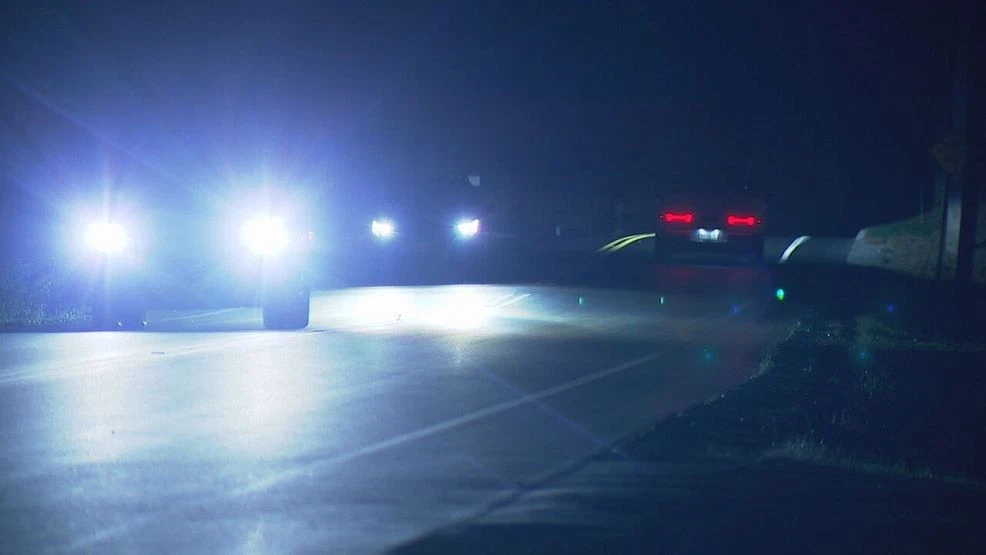
A new analysis from Chaikin Trial Group examines how modern vehicle headlights, particularly high intensity LEDs, influence visibility and safety on American roads. The study draws from federal crash records, national population data, and research from the Insurance Institute for Highway Safety to understand how glare affects drivers and where the risks are most concentrated. The findings show that while glare related crashes represent a small share of total nighttime collisions, the issue remains a meaningful concern for older drivers and for states with disproportionate fatality rates.
The study begins with a broad look at national crash data. Between 2019 and 2023, federal records show 46,154 fatalities from nighttime crashes in areas without artificial lighting. Of those deaths, 446 were linked to glare that impaired a driver’s vision. This represents roughly one percent of all nighttime fatalities in unlit conditions. Although the percentage is small, the consequences are severe when glare contributes to a crash.
To understand where the problem is most pronounced, Chaikin Trial Group compared glare related fatalities across states and adjusted the numbers for population size. This approach highlights states where glare related deaths occur at higher than expected rates.
Top States for Glare Related Fatalities Adjusted for Population
The table below shows the ten states with the highest fatality rates linked to headlight glare during the study period.
| State | Fatalities | 2023 Population | Fatalities per 100,000 |
|---|---|---|---|
| Alabama | 19 | 5,117,673 | 0.37 |
| Kentucky | 17 | 4,512,310 | 0.38 |
| Virginia | 19 | 8,715,698 | 0.22 |
| Indiana | 16 | 6,833,037 | 0.23 |
| North Carolina | 18 | 10,835,491 | 0.17 |
| Georgia | 20 | 11,064,432 | 0.18 |
| California | 50 | 39,198,693 | 0.13 |
| Illinois | 16 | 12,549,689 | 0.13 |
| Florida | 30 | 22,904,868 | 0.13 |
| Texas | 30 | 30,727,890 | 0.10 |
The three most populous states California, Texas, and Florida appear on the list because they have the largest number of drivers and vehicles on the road. Their placement is expected. What stands out more are states like Alabama and Kentucky, where the fatality rates are significantly higher than population size would predict. These states show a disproportionate number of glare related deaths, suggesting that local conditions, demographics, or roadway environments may play a role.
One of the strongest demographic patterns in the study involves older drivers. Federal crash data shows that drivers aged 65 and older accounted for 108 glare related fatalities during the study period. This group is more vulnerable to glare due to age related changes in vision, including slower recovery from bright light exposure.
States With the Highest Glare Related Fatality Rates Among Drivers 65 and Older
| State | Fatalities | 65+ Population | Fatalities per 100,000 |
|---|---|---|---|
| Alabama | 5 | 932,119 | 0.54 |
| Arizona | 5 | 1,437,731 | 0.35 |
| Virginia | 5 | 1,498,931 | 0.33 |
| North Carolina | 6 | 1,915,356 | 0.31 |
| Florida | 13 | 4,917,782 | 0.26 |
| Indiana | 3 | 1,181,568 | 0.25 |
| Texas | 10 | 4,194,990 | 0.24 |
| Illinois | 5 | 2,205,830 | 0.23 |
| Georgia | 3 | 1,699,250 | 0.18 |
| California | 9 | 6,311,919 | 0.14 |
Alabama again ranks at the top, with a fatality rate more than double that of several larger states. Florida, which has one of the largest older driver populations in the country, also ranks high.
What the Data Shows About Glare Related Crashes
Chaikin Trial Group’s analysis incorporates findings from multiple IIHS studies to understand how glare contributes to crashes. One study of 220 nighttime crashes between 2017 and 2024 found that:
- 88 percent of glare related crashes involved oncoming headlights
- 8 percent involved headlights from trailing vehicles
- 4 percent involved headlights from vehicles positioned laterally or parked against traffic
The same study identified the driver actions most commonly linked to glare related crashes.
Driver Actions in Glare Related Crashes
| Driver Action | Percent of Cases |
|---|---|
| Lane departure to the right | 45 percent |
| Impeding object obscured | 23 percent |
| Misjudging a turn | 15 percent |
| Lane departure to the left | 12 percent |
| Other | 4 percent |
These patterns show that glare often disrupts a driver’s ability to maintain lane position or see obstacles in time to react.
How Modern Headlights Compare to Older Systems
The study also examines how LED headlights differ from older halogen systems. IIHS research shows that vehicles with good rated headlights are involved in fewer nighttime crashes than those with poor rated headlights.
Key findings include:
- Vehicles with good rated headlights are involved in 19 percent fewer nighttime single vehicle crashes
- They are involved in 23 percent fewer nighttime pedestrian crashes
- Acceptable headlights reduce nighttime crashes by 15 percent
- Marginal headlights reduce nighttime crashes by 10 percent
LED headlights tend to illuminate more of the roadway and maintain brightness longer than halogen lights. However, they can also produce more intense glare if not properly aligned.
Changes in Headlight Quality Over Time
The IIHS headlight rating program began in 2016. At that time, only one of more than 80 tested headlight systems earned a good rating. Since then, automakers have made significant improvements.
Notable changes include:
- By 2025, 51 percent of tested headlights earned a good rating
- Only 16 percent were rated marginal or poor, compared to 82 percent in 2016
- Excessive glare was found in 21 percent of headlights tested in 2017
- By 2025, only 3 percent produced excessive glare
Manufacturers have also reduced the number of headlight systems offered per model by 17 percent between 2019 and 2021. More vehicles now come standard with a single good rated headlight system.
Examples of models equipped with good rated headlights include:
- Acura RDX
- BMW 5 Series
- Hyundai Palisade
- Subaru Outback
Common Conditions in Glare Related Crashes
IIHS research across 11 states shows that glare related crashes most often involve:
- A single vehicle
- Wet or rainy road conditions
- Local undivided two lane roads
- Lower speed limits
- Drivers over age 65
- Older vehicles
These conditions suggest that glare becomes more dangerous when visibility is already compromised by weather or roadway design.
Driver Perception and Public Concern
A United Kingdom study by the Royal Automobile Club provides additional insight into how drivers perceive headlight brightness. Although the study is international, the findings reflect concerns similar to those expressed by American drivers.
Key findings include:
- 89 percent of drivers believe some headlights are too bright
- 74 percent believe headlight dazzle is common
- 67 percent have slowed down to recover from glare
- 64 percent have worried about a crash due to glare
- 16 percent avoid driving at night because of glare
- 65 percent say it takes one to five seconds to recover after being dazzled
In the United States, more than 78,000 people signed a petition in early 2026 calling for restrictions on overly bright headlights.
Improving Safety and Reducing Glare
The study highlights several strategies that can help reduce glare related risks.
Recommended Driving Practices
- Use the Flash Off Protocol, which involves briefly switching headlights off and on to alert another driver without using high beams
- Follow the Look Right Rule by focusing on the white fog line to maintain lane position when facing glare
Vehicle Maintenance Considerations
- Cloudy or oxidized headlight lenses can reduce illumination by up to 80 percent
- These same lenses can increase glare by up to 60 percent
A Clearer Picture of Risk
The data shows that glare related crashes are relatively rare, accounting for no more than two out of every thousand nighttime crashes. However, the risks are not evenly distributed. Older drivers, older vehicles, wet roads, and undivided local roads all increase the likelihood of a glare related crash. While LED headlights offer significant safety benefits, proper alignment and maintenance remain essential.
Chaikin Trial Group’s study underscores that headlight improvements have not increased glare related crashes. Instead, better headlight design has contributed to safer nighttime driving overall. Even so, the study suggests that continued attention to headlight standards, driver education, and vehicle maintenance will be important as lighting technology continues to evolve.


