



Commercial buildings require reliable roofs that can stand strong against weather, foot traffic, and the test of time. Property owners and managers usually seek materials that balance affordability with long-term protection. Among different roofing choices, single-ply membranes have grown in popularity because they offer simplicity in installation and effective resistance to outdoor conditions.
Many business owners consider single-ply membrane roofing a key option within long-lasting commercial roofing systems because of its durability and reliability. They fall into this category since they are designed with strength and performance in mind. In this guide, we will discuss the features, types, installation process, benefits, and care methods for single-ply membrane roofing.
Core Features of Single-Ply Membrane Roofing
Single-ply membrane roofing consists of flexible sheets crafted from synthetic materials, usually rubber or thermoplastic compounds. These sheets are rolled out and installed over flat or low-sloped roofs, forming a continuous waterproof surface. Because of their lightweight nature, they do not require excessive structural support.
One of the biggest advantages is that the membranes come in large sheets, reducing seams that could potentially leak. Seams are heat-welded, glued, or taped depending on the type of membrane used. This method provides extra reliability in preventing water from entering the building, which is critical in cities with heavy rainfall.
Comparing Different Types of Membranes
There are three primary forms of single-ply membranes used in commercial settings: TPO, PVC, and EPDM. Each material offers unique properties suited for different climates and building requirements. TPO and PVC are thermoplastic materials, while EPDM is a synthetic rubber option.
Key Distinctions to Know:
- TPO membranes are resistant to UV exposure and are energy efficient due to their reflective white surfaces.
- PVC membranes perform well against chemical exposure, making them suitable for industrial sites.
- EPDM membranes are known for their flexibility and strength across a wide temperature range.
How Installation Is Typically Done
The installation process is straightforward compared to some other roofing techniques. Contractors start by preparing the surface to ensure it is clean, smooth, and free from sharp edges that may puncture the membrane. Insulation boards are often placed beneath the sheets for added energy efficiency and structural stability.
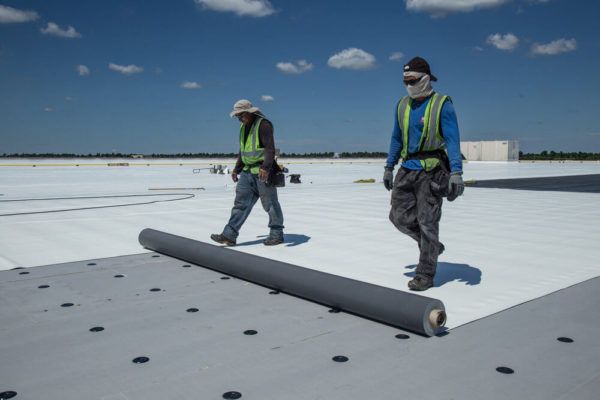
After preparation, the membranes are rolled out across the roof. They are then secured either through mechanical fasteners, adhesives, or ballast methods using stones. This precise joining process ensures that even large flat rooftops in industrial locations stay protected.
Practical Advantages You Should Know
Single-ply membranes offer many advantages that attract building owners.
- Lightweight Design: Reduces structural stress while allowing faster installation without heavy reinforcements.
- Energy Efficiency: Reflective surfaces cut cooling costs and improve indoor comfort in hotter locations.
- Durability: Resists wind uplift, moisture, and UV exposure for long-term protection.
Easy Repairs: Damaged sections can be patched quickly, saving time and maintenance costs.
Caring for the Roof After Installation
Proper care is essential to extend the service life of any roofing system. Routine inspections should be scheduled at least twice a year, particularly after storms or seasonal changes. Inspectors check for signs of punctures, seam weaknesses, or debris buildup that may affect drainage.
Maintenance does not require complex steps, but regular cleaning helps avoid clogged drains or standing water. Quick repairs should always be performed by trained professionals to prevent further damage. Consistent upkeep ensures the roofing continues to serve as a reliable shield for commercial properties in different locations.
Single-ply membrane roofing has proven itself as a dependable option for protecting business properties with flat or low-sloped designs. Many property managers who consider long-lasting commercial roofing systems often include single-ply membranes among their preferred choices. With proper installation and care, these roofs deliver reliable protection for buildings across various locations.


