



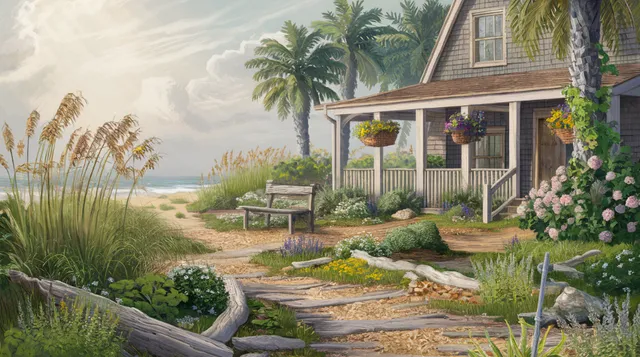
Creating and maintaining a garden by the coast is a uniquely rewarding endeavour. The breathtaking vistas, fresh ocean air, and gentle maritime light offer an unparalleled backdrop for any outdoor space. However, the very elements that make these locations so desirable, the salt, wind, and specific soil conditions, also present a distinct set of horticultural challenges. For homeowners, understanding how to work with these coastal conditions, rather than against them, is the key to a thriving, resilient landscape.
Understanding Your Coastal Environment
Before selecting a single plant or drawing a design, the first step is to observe and understand the specific microclimate of your property. Not all coastal areas are the same; factors like your property’s elevation, its proximity to the shore, the direction of prevailing winds, and the amount of direct sunlight will dramatically influence your gardening strategy.
The Primary Adversaries: Salt and Wind
The two most significant forces shaping a coastal garden are salt spray and persistent winds. Salt Spray: Carried by ocean winds, fine salt particles can settle on plant leaves, inhibiting their ability to photosynthesise and draw moisture. This leads to “salt burn,” visible as browned, scorched leaf edges, stunted growth, and in severe cases, plant death.
Persistent Winds: Constant wind accelerates moisture loss from plant leaves (transpiration), leading to dehydration. It can also cause physical damage, breaking branches and shredding delicate foliage. Furthermore, wind exacerbates the salt spray problem, carrying it further inland.
Soil Considerations by the Sea
Coastal soil is often sandy or gravelly. While this provides excellent drainage, a bonus for preventing root rot, it also means the soil has a low capacity to retain water and nutrients. Both water and vital fertilisers can quickly leach away, leaving plants thirsty and undernourished. In some areas, soil may also be more alkaline.
Designing for Durability and Beauty
A successful coastal landscape embraces a philosophy of resilience. The goal is to create a space that feels like a natural, sheltered extension of the surrounding environment.
Strategic Windbreaks and Sheltering
One of the most effective strategies is to establish natural windbreaks. This doesn’t mean building a solid wall, which can create turbulent eddies, but rather using layered plantings to filter and slow the wind.
- Primary Layer: Plant hardy trees or tall, dense shrubs on the windward side (typically the side facing the water). Excellent choices include Shore Pine (Pinus contorta), Sitka Spruce (Picea sitchensis), or native evergreen shrubs.
- Secondary Layer: In front of these, add a mix of mid-sized shrubs to create a buffer zone.
- Tertiary Layer: Closest to your living areas, you can place more sensitive perennials and ornamental plants, now protected by the outer layers.
Plant Selection: Champions of the Coast
The cornerstone of a low-maintenance, thriving coastal garden is the intentional selection of salt-tolerant and wind-resistant species. These plants have evolved adaptations like waxy, succulent, hairy, or small leaves to minimise water loss and salt intake.
Native Plants: Often, the very best choices are plants native to your coastal region. They are already perfectly adapted to the local conditions, require less water once established, and provide crucial habitat for local birds and pollinators. For properties in the Pacific Northwest, stellar examples include:
- Trees: Garry Oak (Quercus garryana), Arbutus (Arbutus menziesii), Shore Pine.
- Shrubs: Salal (Gaultheria shallon), Oregon Grape (Mahonia aquifolium), Kinnikinnick (Arctostaphylos uva-ursi), Tall Oregon Grape (Mahonia nervosa).
- Perennials & Grasses: Sea Thrift (Armeria maritima), Coastal Strawberry (Fragaria chiloensis), Tufted Hair Grass (Deschampsia cespitosa).
Robust Ornamental Plants: Many non-native plants also exhibit superb coastal toughness. Consider ornamental grasses like Blue Fescue (Festuca glauca), shrubs like Rosemary (Rosmarinus officinalis) and Hebe varieties, and perennials like Sedum (‘Autumn Joy’ is a classic), Euphorbia, and Lavender.
Foundational Practices for Long-Term Health
Even with the right plants, establishing them successfully requires mindful preparation and care.
Soil Amendment and Preparation
Given the typically lean, fast-draining coastal soil, amending it at planting time is a critical investment. Incorporating generous amounts of well-rotted compost or manure will dramatically improve the soil’s structure, its ability to retain moisture and nutrients, and its overall fertility. For individual planting holes, creating a mix of native soil and compost is far better than planting into pure compost.
Intelligent Watering Practices
While many coastal plants are drought-tolerant, they all require consistent watering during their first one to three growing seasons to develop deep, robust root systems. The practice of deep, infrequent watering is far more beneficial than frequent, shallow sprinkling. Utilising soaker hoses or drip irrigation systems delivers water directly to the root zone, minimising evaporation and waste. Once established, your garden will require significantly less supplemental watering, embodying the principles of water-wise xeriscaping.
Pruning and Maintenance in a Maritime Climate
Pruning in coastal areas often focuses on maintaining plant health and wind resistance. Regularly removing dead, damaged, or diseased wood helps prevent problems. Some shaping may be necessary to encourage a denser, more compact growth habit that is less likely to be damaged by wind. It’s generally advisable to avoid high-nitrogen fertilisers, which promote soft, sappy growth that is particularly vulnerable to salt and wind damage.
Bringing a Vision to Life
For many homeowners, the prospect of transforming a windy, salt-sprayed property into a serene and lush garden sanctuary can feel daunting. This is where the value of professional insight becomes clear. An experienced team understands the nuances of the local climate, has extensive knowledge of proven plant palettes, and possesses the design skill to create functional, beautiful outdoor living spaces that stand the test of time.
A knowledgeable landscaping company in Victoria can conduct a thorough site analysis, identifying microclimates on your property, those sheltered corners perfect for a rose garden, or the sunny, exposed slope ideal for a tapestry of drought-tolerant grasses and succulents. They can also navigate practicalities like irrigation system design, soil testing, and the phased implementation of a master plan.
From conceptual design to the careful selection and placement of every plant, professional landscapers in Victoria work to build not just a garden, but a resilient ecosystem. Firms like Triton Landscaping specialise in this very approach, focusing on creating landscapes that are deeply attuned to the local coastal environment, ensuring beauty and longevity with less ongoing effort.
Conclusion: A Partnership with Nature
Coastal gardening is an exercise in harmonious resilience. It asks us to listen to the land, to choose plants that belong, and to design spaces that offer shelter and beauty in equal measure. By respecting the power of the sea and wind, and employing strategic design and plant choices, you can cultivate an extraordinary outdoor space that doesn’t just survive but flourishes. The result is a deeply personal retreat, a habitat for wildlife, and a testament to the enduring beauty of a garden that is thoughtfully woven into the coastal tapestry.


