






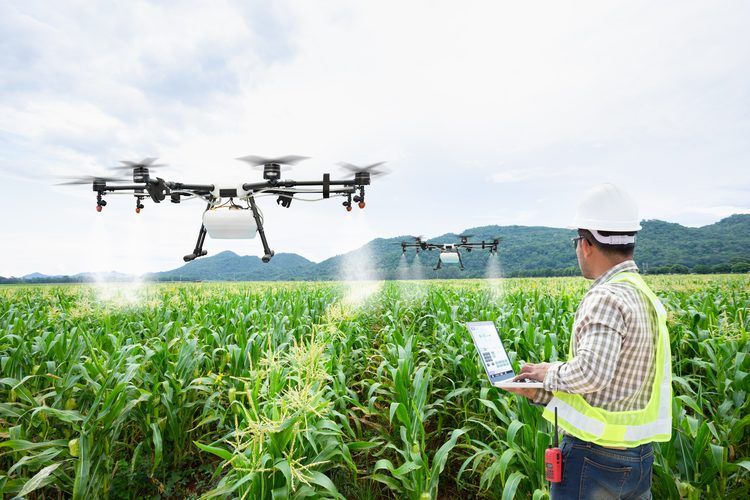
In recent years, the agricultural sector has witnessed a wave of innovation driven by Agritech startups. These companies are revolutionizing traditional agricultural practices by leveraging cutting-edge technologies to address key challenges such as food security, resource efficiency and sustainability. This article explores the role of Agritech startups in disrupting traditional agriculture and highlights some of the innovative solutions they bring to the table.
Harnessing Technology for Agriculture
Agritech startups are harnessing technology to transform every aspect of agriculture, from crop cultivation and livestock management to supply chain logistics and market access. By integrating technologies such as Artificial Intelligence (AI), Internet of Things (IoT), robotics, and data analytics, these startups are developing innovative solutions to optimize agricultural processes, increase yields and reduce environmental impact.
Precision Agriculture: Maximizing Efficiency
One of the key areas where Agritech startups are making significant advancements in precision agriculture. By utilizing AI algorithms and sensor technology, these startups enable agriculture experts to monitor and manage their fields with unprecedented precision. From soil health analysis to predictive yield modeling, precision agriculture solutions empower farmers to make data-driven decisions that optimize resource usage, minimize input costs, and maximize crop yields.
Smart Farming: Enhancing Automation
Smart farming solutions developed by Agritech startups are changing farm operations through automation and connectivity. IoT-enabled devices and sensors monitor various parameters such as soil moisture, temperature and crop health in real-time, which allows farmers to remotely control irrigation, fertilization and pest management systems. Robotics and drones further enhance efficiency by automating tasks such as planting, harvesting and crop scouting, which reduces labor costs and increases productivity.
Vertical Farming: Redefining Urban Agriculture
Agritech startups are also redefining urban agriculture through vertical farming solutions. By growing crops indoors in vertically stacked layers, these startups maximize space efficiency while minimizing water usage and environmental impact. Controlled environment agriculture systems provide optimal growing conditions year-round, which enables urban farmers to produce fresh, high-quality produce closer to consumers and reduces transportation costs and food miles.
Supply Chain Innovation: Ensuring Food Security
Ensuring a resilient and efficient food supply chain is another area where Agritech startups are making significant contributions. From farm-to-fork traceability solutions to blockchain-enabled platforms, these startups are enhancing transparency, traceability and efficiency throughout the food supply chain. By providing consumers with access to information about the origin, quality and sustainability of food products, Agritech startups are fostering trust and accountability in the agricultural sector.
Challenges and Opportunities
Despite the immense potential of Agritech startups, they face challenges such as access to capital, regulatory hurdles and the need for farmer adoption. However, these challenges also present opportunities for collaboration, innovation and market growth. Governments, investors and industry stakeholders play a crucial role in supporting Agritech startups through funding, policy support and infrastructure development to realize their full potential in transforming agriculture for the better.
Agritech startups are driving a wave of innovation that is disrupting traditional agriculture and reshaping the future of food production. By harnessing technology and developing innovative solutions, these startups are addressing key challenges facing the agricultural sector while unlocking new opportunities for sustainable growth and food security. As Agritech continues to evolve, its impact on agriculture and society is poised to grow, which can create a more resilient, efficient and sustainable food system for generations to come.


