



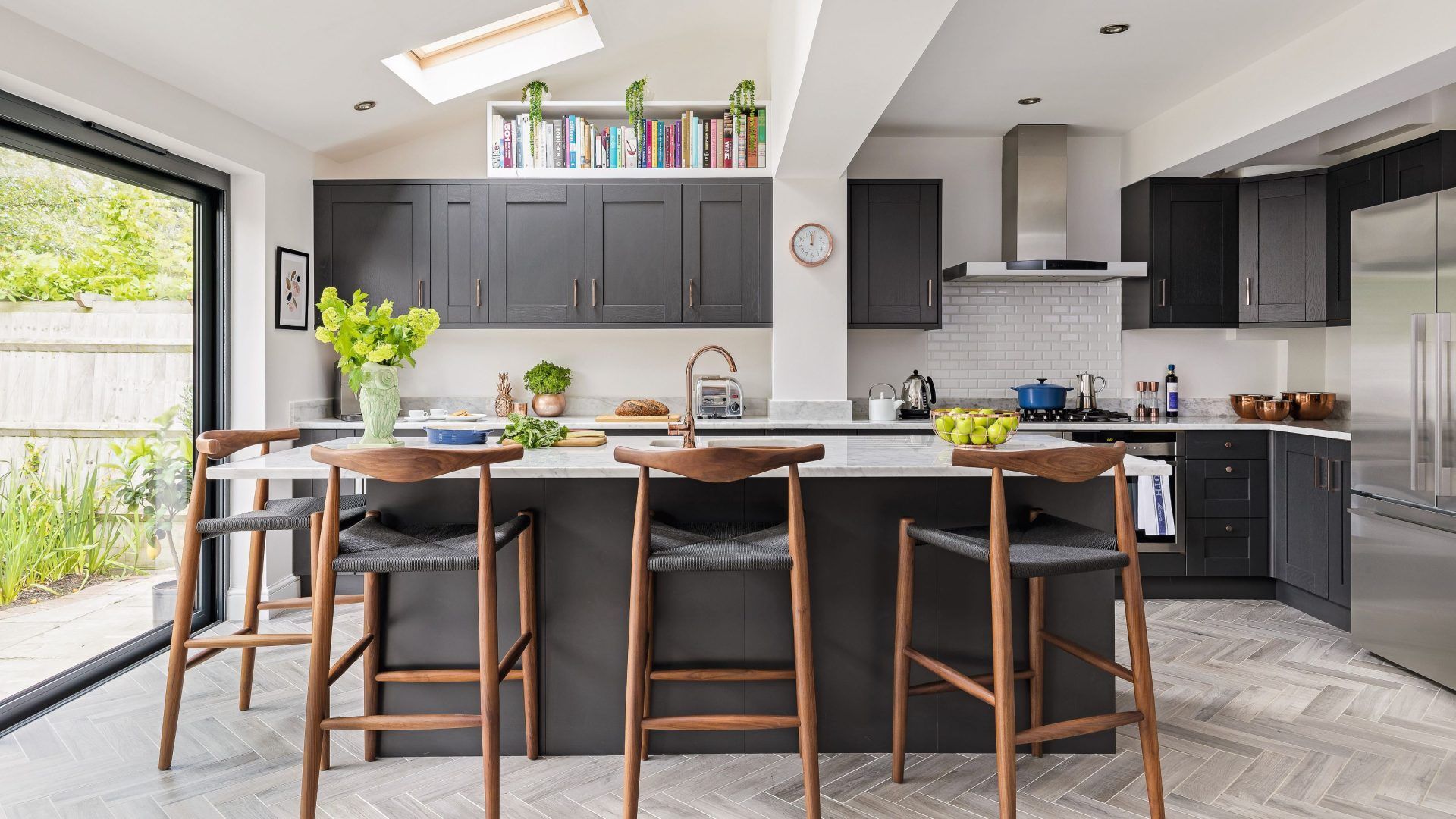
The kitchen is often considered the heart of the home, a space where families gather, meals are prepared, and memories are made. Selecting the best kitchen layout is crucial in ensuring this space is functional and aesthetically pleasing. Whether you’re renovating an existing kitchen or designing a new one from scratch, understanding the different kitchen layouts can help you create a space that suits your lifestyle and maximizes efficiency. In this blog, we’ll explore various kitchen layouts to help you decide which one is right for your home.
The One-Wall Kitchen
Overview
As the name suggests, a one-wall kitchen is a layout in which all the kitchen appliances, cabinets, and countertops are placed along a single wall. This design is often found in smaller homes or apartments with limited space.
Advantages
- Space-Saving: Ideal for small spaces, this layout maximizes efficiency without occupying too much room.
- Open Layout: It creates an open and airy feel, making the kitchen blend seamlessly with the rest of the living area.
- Cost-Effective: Fewer cabinets and countertops mean lower costs for materials and installation.
Disadvantages
- Limited Counter Space: The linear design can restrict the amount of counter space available for food preparation.
- Storage Constraints: With limited cabinetry, storage can become an issue, requiring creative solutions like vertical storage or multi-functional furniture.
Best For
The one-wall kitchen is best for small homes, apartments, or those who prefer an open floor plan that integrates the kitchen with the living or dining areas.
The Galley Kitchen
Overview
A galley kitchen consists of two parallel walls featuring countertops, appliances, and cabinets. This design is reminiscent of a ship’s galley, hence the name, and is known for its efficient use of space.
Advantages
- Highly Efficient: The compact design minimizes walking distance between work zones, making cooking and cleaning up more efficient.
- Ample Storage: With slim shaker cabinets on both sides, there’s plenty of stylish and efficient storage for kitchen essentials.
- Cost-Effective: Similar to the one-wall kitchen, it typically requires fewer materials, which can be budget-friendly.
Disadvantages
- Limited Space: Can feel cramped, especially if too many people use the kitchen simultaneously.
- Less Social: The layout isolates the cook from the rest of the household or guests.
Best For
The galley kitchen is ideal for small to medium-sized homes where space efficiency is a priority and for serious home cooks who value functionality over social interaction in the kitchen.
The L-Shaped Kitchen
Overview
The L-shaped kitchen is designed with countertops on two adjoining walls, forming an “L.” This layout is versatile and works well in both small and large spaces.
Advantages
- Efficient Workflow: The L-shape allows for a natural workflow between the cooking, cleaning, and prep areas.
- Open and Airy: It opens up the kitchen to other living areas, making it feel more spacious.
- Flexible Design: Can easily accommodate an island or dining area within the kitchen.
Disadvantages
- Corner Space: Utilizing the corner space effectively can be challenging and may require custom cabinetry solutions.
- Limited Counter Space: Depending on the size, it might not offer as much counter space as other layouts.
Best For
The L-shaped kitchen is excellent for medium to large homes, especially for those who enjoy entertaining and prefer a kitchen that integrates with the living or dining room.
The U-Shaped Kitchen
Overview
The U-shaped kitchen features three walls of cabinets and appliances, forming a “U” shape. This layout provides plenty of storage and workspace, making it a favorite among avid cooks.
Advantages
- Ample Storage and Counter Space: Offers the most storage and counter space compared to other layouts.
- Efficient Workflow: The U-shape creates a highly efficient work triangle, minimizing the distance between the sink, stove, and refrigerator.
- Privacy: Provides a more enclosed space, which can benefit those who prefer a dedicated cooking area.
Disadvantages
- Can Feel Enclosed: The U-shape can feel claustrophobic in smaller kitchens.
- Requires More Space: Best suited for larger kitchens, as it can overwhelm smaller spaces.
Best For
The U-shaped kitchen is perfect for larger homes, for those who spend a lot of time cooking, and for those who need ample storage and workspace.
The Island Kitchen
An island kitchen includes a freestanding island that can be used for additional counter space, storage, or seating. This layout can be combined with other layouts, such as L-shaped or U-shaped kitchens. For those who enjoy the convenience of modern appliances, incorporating a battery operated blender on the island can enhance the kitchen’s functionality, making meal prep even more efficient. The island serves as a central gathering point for family and guests, enhancing the kitchen’s role as a social hub.
Overview
An island kitchen includes a freestanding island that can be used for additional counter space, storage, or seating. This layout can be combined with other layouts, such as L-shaped or U-shaped kitchens.
Advantages
- Additional Workspace: Provides extra counter space for food preparation and storage.
- Social Hub: Creates a central gathering point for family and guests, enhancing the kitchen’s role as a social hub.
- Flexible Design: The island can serve multiple purposes, from a prep area to a dining space or even housing appliances like the best work station kitchen sinks and accessories or cooktop.
Disadvantages
- Space Requirements: Requires a large kitchen to avoid feeling cramped.
- Can Be Expensive: Adding an island can increase the overall cost of the kitchen remodel.
Best For
The island kitchen is ideal for large homes and those who love to entertain, as it provides additional workspace and a central area for social interaction.
The Peninsula Kitchen
Overview
The peninsula kitchen features a connected island, or a “peninsula,” extending from one part of the kitchen, often forming a G-shape. This design provides many of the benefits of an island kitchen but requires less space.
Advantages
- Extra Counter Space: Like an island, it offers additional counter space and storage.
- Space-Efficient: Takes up less floor space than a freestanding island while still providing many of the same benefits.
- Defined Space: Helps to delineate the kitchen area from other parts of the home, which can be useful in open floor plans.
Disadvantages
- Can Feel Enclosed: Depending on the size and layout, the peninsula can create a more enclosed feeling in the kitchen.
- Less Flexible: Unlike a freestanding island, the peninsula is fixed, which can limit the kitchen’s layout flexibility.
Best For
The peninsula kitchen is suitable for medium to large homes and for those who want the benefits of an island without requiring as much space.
The G-Shaped Kitchen
Overview
The G-shaped kitchen, also known as a peninsula kitchen, extends a U-shaped layout with an additional partial fourth wall. This design offers even more storage and workspace.
Advantages
- Maximum Storage and Workspace: Provides more storage and counter space than almost any other layout.
- Efficient Workflow: The G-shape ensures a highly efficient work triangle and easy movement within the kitchen.
- Separation: Clearly defines the kitchen area from the rest of the living space.
Disadvantages
- Requires Ample Space: Needs a larger area to avoid feeling cramped.
- Potentially Isolating: Can separate the cook from other areas of the home or guests.
Best For
The G-shaped kitchen is perfect for large homes and those needing maximum storage and workspace, making it ideal for serious home cooks and large families.
Choosing the Right Kitchen Layout for Your Home
When deciding on the best kitchen layout for your home, consider the following factors:
- Space: Evaluate the size and shape of your kitchen area. Smaller spaces may benefit from one-wall or galley kitchens, while larger areas can accommodate L-shaped, U-shaped, or island kitchens.
- Workflow: Think about how you use your kitchen. The work triangle (the distance between the sink, stove, and refrigerator) is essential for efficiency.
- Storage Needs: Consider how much storage you need. More extensive layouts like U-shaped and G-shaped kitchens offer the most storage.
- Social Interaction: If you love entertaining, an island or peninsula kitchen might be the best choice, as they provide additional seating and gathering space.
- Budget: Your budget will influence your choice. Some layouts are more cost-effective due to fewer materials and simpler designs.
In conclusion, selecting the best kitchen layout depends on your unique needs and the specific constraints of your space. By carefully considering the advantages and disadvantages of each layout, you can create a kitchen that not only meets your functional needs but also enhances the overall aesthetic and value of your home. Whether you opt for a compact one-wall kitchen or a spacious island kitchen, the right layout will transform your kitchen into a welcoming and efficient space for years to come.


