Hip pain is a problem that almost never arrives with some clear label attached to it. It’s a frustrating condition to work with, especially when it can have a wide range of culprits behind it. One potential cause behind your discomfort could be a labral tear of the hip, a particularly heinous condition that will simply not show itself until the pain begins to affect your quality of life.
So if you’ve been struggling with ongoing hip pain and aren’t quite able to figure out its cause, then fret not. Read on as we figure out if labral tears could be the cause you’ve been looking for and whether it’s time you get help from a hip specialist in London.
What is a hip labral tear?
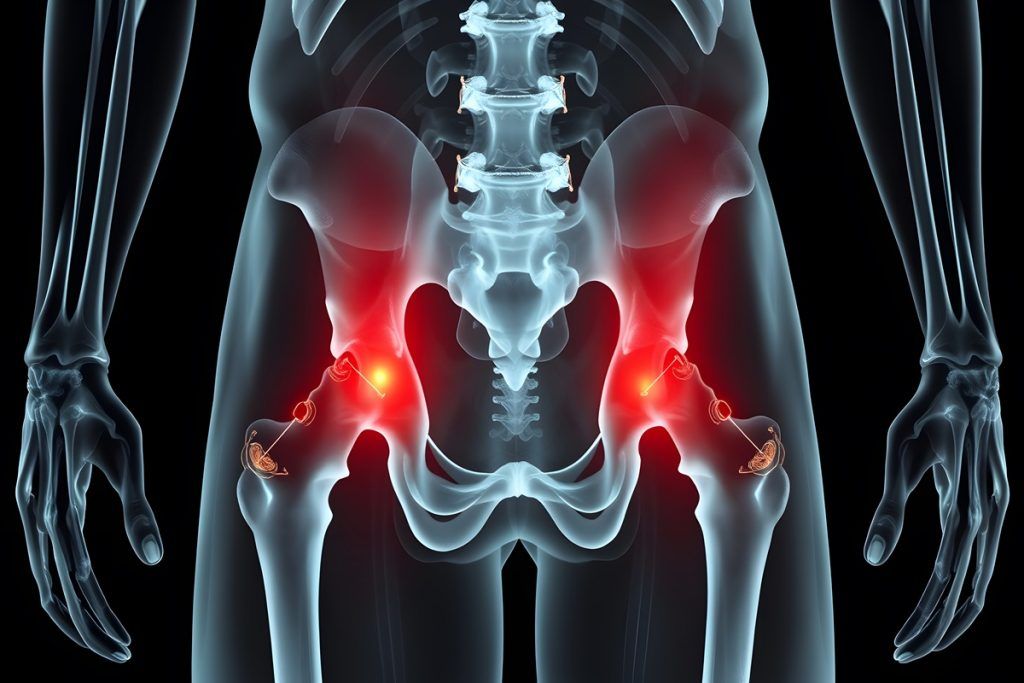
So we all know how a hip joint works – it’s a ball and socket joint where the top of our thigh bone sits neatly inside the hip socket. What lines this mechanism and makes it function like a well-oiled machine is called the labrum. The labrum basically acts as a seal for our joint, stabilising it for smooth movement.
But when this tissue wears down or gets damaged, we get a labral tear. Once this happens, it ceases to perform its function well, which not only affects the stability of our hip joint but also our movement.
How do we get hip labral tears?
A labral tear in our hip can have many causes. Repetitive movement is arguably the biggest cause, especially for all the athletic folks out there. Activities like football, ballet, hockey, and long-distance running put a lot of stress on the joint, and doing them over a long time can seriously wear down the labrum.
Unfortunately, some people are also born with subtle differences in how their hip joint is formed, such as femoroacetabular impingement (FAI), a condition in which the socket of the joint may not be shaped correctly. Such differences are essentially structural issues that cause friction with the labrum, wearing it down over time.
Trauma is obviously another major reason why people get labral tears. A fall if you’re older, a car accident, or just a sudden impact on the hip joint – any of these things can deal a lot of damage to the labrum. But chances are that you will not notice a labral tear right away in any of these cases. Plenty of people are able to walk around with a labral tear for some time and never recall a specific moment when it may have happened.
Who is more at risk of hip labral tears?
While hip labral tears can occur in anyone for any reason, some people are at greater risk. Because our hip joints take a lot of stress during physical activity, athletes are often more severely affected by this condition. As we get older, we become much more prone to this condition because the labrum can become less resilient over time. Last but not least, any poor movement pattern, muscle imbalance, or previous hip injury may also put you at risk of a tear, especially if these things were never fully addressed in the past.
What does a labral tear feel like?
While it will likely never show itself for a long time, you’ll feel the pain of a labral tear deep inside the groin area. It will be a very dull ache that may come and go from time to time. But there’s also a very good chance you may feel the pain radiating along the side of the hip or even in the buttocks. That’s part of the reason why labral tears are so tricky to self-diagnose.
While the pain itself will be dull and constant for most of the time, you may feel a sharp pain during specific movements involving the joint – things like twisting, pivoting, or getting in and out of a car. Some people also say they feel a clicking or catching sensation during motion, as if the hip is locking down. Labral tears are also accompanied by stiffness when you don’t move for a while, along with a constant feeling that your hip is weak, unstable, and on the verge of giving out.
Is what you’re experiencing definitely a labral tear?
Now, reading what this condition feels like, you may be inclined to believe that it’s certainly what you’re facing as well. However, please remember that hip pain can have many possible causes, and many of them present in the same way as a labral tear. From muscle strains and tendon issues to arthritis, bursitis, and even necrosis, there are simply too many conditions that mimic a labral tear.
With all that has been discussed so far, it should be clear that a labral tear just cannot be self-diagnosed in any way – especially with symptoms alone. What you’re experiencing is a sign that you need to get yourself checked right away and seek guidance from a good doctor.
Can a labral tear heal on its own?
No, labral tears rarely heal on their own – at least not completely. The thing about this tissue is that it has a very limited supply of blood. That makes natural healing quite difficult. Now, does that mean you absolutely need to get surgery for your tear? Not really, as many can manage this condition well with a bit of conservative treatment and a healthy lifestyle – especially if the tear is small and there’s no major underlying cause behind it.
But if you ignore the signs of a tear altogether, there is a good chance things will only get worse over time, particularly if the root cause is a structural issue with the bone. Any ongoing joint instability or poor movement will only increase the strain on this cartilage, inevitably leading to early arthritis. All that is to say, if you’re struggling with hip pain and you think it could be a labral tear, it’s time to visit a hip specialist.
How are hip labral tears diagnosed?
When you first walk in to get a diagnosis, the process will usually start with a detailed discussion with your doctor. A specialist will ask about your symptoms, level of activity, and when the pain developed. This will be followed by a physical examination, and the doctor will ask you to make specific movements that can reproduce the pain in its entirety. Your joint function will also be assessed in this stage.
By now, your doctor will have a very good idea of what you’re struggling with. To concretely conclude their diagnosis, they will ask you to go through a few imaging tests. X-rays are often used first to evaluate your bone and joint structure, along with ruling out the possibility of arthritis or fractures. But since labral tears won’t show themselves on an X-ray, the next test you take is an MRI, sometimes with added contrast (also known as an MR arthrogram), which will provide a very clear picture of your labrum and its condition. With this, the doctor will know with absolute certainty whether you’re struggling with labral tears or something else.
How are labral tears managed?
The treatment for labral tears will depend on their size, your symptoms, your current level of activity, and whether any structural issues are the root cause. But in all likelihood, you’ll start with conservative management first. This will include a mix of activity modification, physiotherapy, and a routine of anti-inflammatory medications. With all of this combined, you should see a significant improvement in hip pain and movement. For most people, doing this much is enough to restore joint function and keep pain in check.
Should conservative treatment fail to bring any relief to your situation, the next step for you will be to consider getting joint injections. These are filled with targeted relief medication that can reduce inflammation and pain for a longer period than oral medication. If even injections will not keep the symptoms in check, the final step will be to undergo surgery. This will involve repairing or trimming the torn labrum via arthroscopy until the joint is in a better overall condition. While we’re on the topic, do note that surgeries for labral tears often boast amazing success rates, so there’s practically nothing for you to worry about. You’ll be in safe hands, and you’ll come out of this treatment feeling much better than before.
What should you do right away?
You’ve already taken the first step towards dealing with a labral tear by trying to understand it. But, if you’re experiencing hip pain at the moment, the best thing you can do for yourself is to stop ignoring it and get help right away. Don’t try to self-diagnose the issue and try to avoid home remedies for now – book an appointment at the best clinic you can find in London and start from there.
Getting an evaluation on time can save you months or even years of unnecessary discomfort and reduce the risk of long-term joint damage. Remember, this is a common problem, but this is not something you have to live with. A bit of timely treatment will go a long way in ensuring you live your best life going forward.