



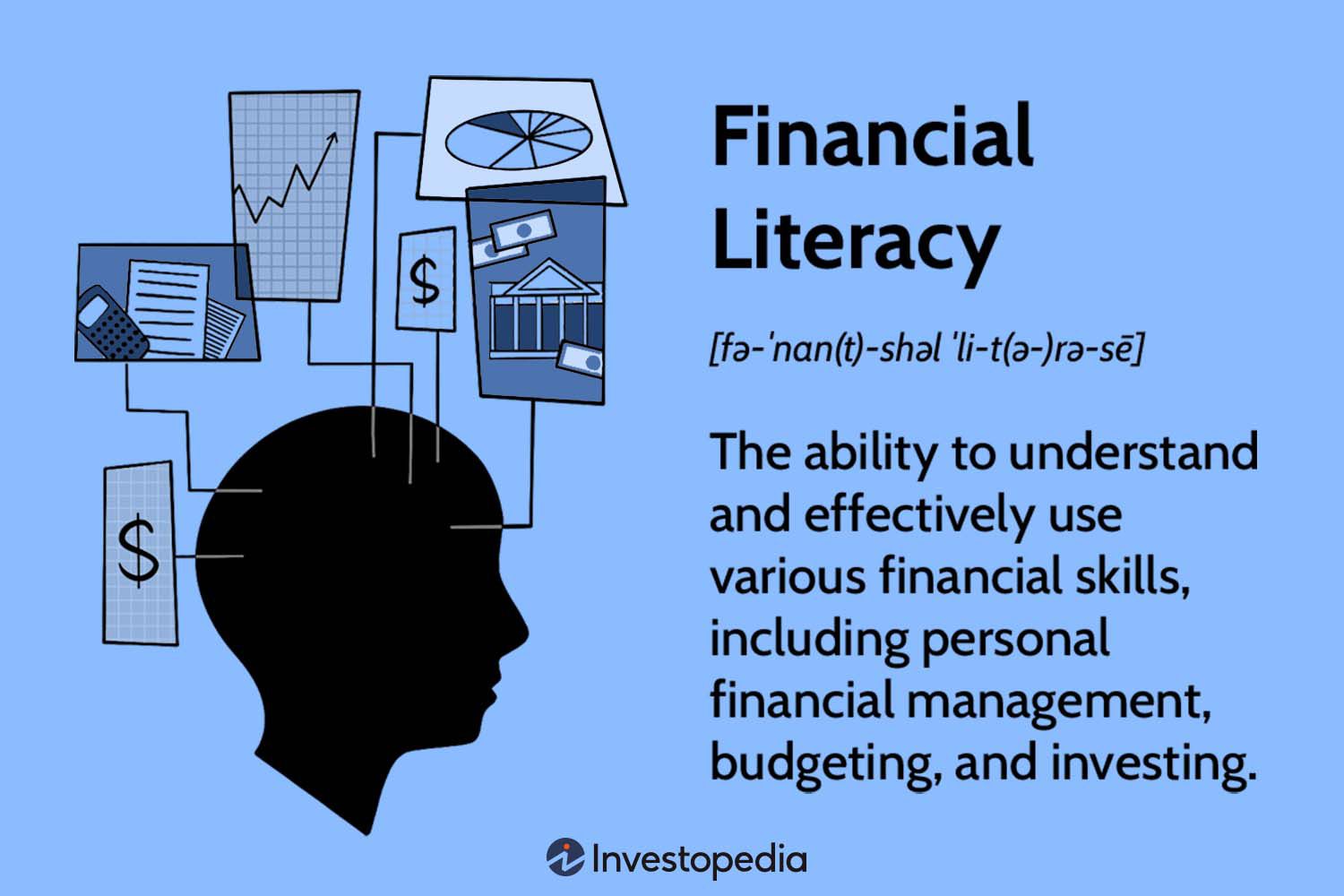
What is Financial Literacy?
Just as the skills of reading and writing are necessary to navigating life, financial literacy is an equally foundational skill. By definition, financial literacy is the ability to understand and incorporate various financial skills into one’s life. Financial literacy encompasses everything from budgeting to investing to debt management and financial planning. Incorporating financial literacy into one’s life directly correlates with reduced stress and higher success levels.
According to a recent study by Northwestern Mutual 44% of Americans reported money as their #1 stressor in life. Through financial literacy and these tips from LoanMart, you can gain solid ground on the rocky terrain of the current economy. After educating yourself about this concept, you will see how through education, research and planning you can empower yourself with the tools to be a financially literate individual.
What Are The Three Main Components of Financial Literacy?
While a variety of money issues and spending habits can fall under the category of financial literacy, there are three main components that govern this concept. When it comes to financial literacy, you should familiarize yourself with the following concepts:
- An Updated Budget
- Dedicated Savings
- ID Theft Prevention
All of these components work together to help individuals achieve financial literacy. In order to have a solid grasp and understanding of your finances, it is necessary for you to constantly update your budget, insure you have a solid savings account that works for you and your needs and that you are staying diligent about ID theft prevention in today’s digital world.
Investing in an Updated Budget
Budgeting is incredibly important. It is vital that you have a firm understanding of how much money you have coming in each month, and how much money you have going out. Budgeting can help you plan for big expenses, and help to ensure that you have a dedicated emergency fund for a rainy day. However, for budgets to be most effective they need to be updated regularly. Every time you have a change in income (an increase or decrease) it is important you amend your budget. In addition, budgeting needs to be adjusted as you achieve your budgeting goals and to help make room for new goals.
The Importance of Dedicated Savings
Secondly, with inflation on the rise it is more important now than ever to have dedicated savings. There are a variety of savings accounts that you can invest in, and each one can serve a different purpose. Some of the types of savings you may want to consider include:
- Traditional Savings Accounts
- High-Yield Savings Accounts
- Money Market Accounts
- 401(k) or IRA Accounts
There are advantages and disadvantages to each of these account types. With a traditional savings account, you can likely open this type of account easily at your local bank or credit union. While some savings accounts allow customers to accrue interest, typically this is a small amount.
For those looking to earn a higher interest amount on savings, you may want to explore a high-yield savings account. These are traditionally available through online banks. While online banks can be highly convenient in some ways, the lack of brick and mortar location means that transferring money can take time -even days.
A money market account, or MMA, is a type of savings account to explore if you are looking to invest a significant amount of money. Typically these accounts are insured by the FDIC or NCUA and offer a higher interest rate. However, these types of accounts often limit how many transactions you can make.
While the above mentioned accounts can help you save for any type of expense, 401(k)s or IRA accounts help you to save specifically for retirement. 401(k)s specifically offer a tax advantage to consumers and oftentimes employers will match your investment. IRAs are similar in the sense that your investments have tax benefits. However, this type of account is not offered by an employer.
The Urgency of ID Theft Prevention
In today’s online and digital society, the risk of ID theft has increased dramatically. According to the Bureau of Justice Statistics, in 2021 around 23.9 million people were victimized by identity theft. Furthermore, the effects of identity theft can reverberate for years to come and continue to be a problem for those affected.
The good news is there are steps that consumers can take in order to protect themselves. In addition to incorporating strong passwords and only using trusted electronic devices, you may want to consider incorporating these additional tips:
- Guard Your Social: Protect your social security number! Never give this number over the phone unless you have verified who you are talking to. In addition, make sure you ask if the encryption level is strong enough for you to send your social via email when communicating with banks and employers.
- Check Emails: Learn the signs of email phishing and be careful of anything that you open.
- Guard Social Media: Stay mysterious on social media sites. Don’t overshare and avoid putting personal information or photos in public posts.
On top of this, it is incredibly important to monitor your credit. You can check your credit report for free once a year. Equifax, Experian and TransUnion are three of the national credit bureaus that can provide this for you.
How Can I Become Financially Literate?
By incorporating the three main principles into one’s life, you can become financially literate. In addition, education is key. If you feel as though you already strive to incorporate budgeting, saving and identity theft prevention into your wheelhouse of financial smarts, there are additional ways to learn more. You may want to consider:
- Books or Articles: Stay up to date on financial news. Look for books at your public library that fall under the topics of budgeting, saving and investing.
- Education Courses: If you are starting from scratch, consider taking a class to learn more about finances. Many local or community colleges offer finance classes. In addition, you can seek out these classes from the comfort of your home as well. Check out sites such as Khan Academy that offer a list of financial courses that range from beginner to more topic specific.
- Follow: Find some financial blogs or pages to follow on instagram or other social media. These pages often offer short and sweet digestible tips that offer advice that individuals can easily incorporate.
You may also want to consider sitting down and speaking with a financial advisor who can help to give you advice that is specific to your individual financial situation!
The Dangers of Financial Illiteracy
Just as unhealthy habits tend to catch up with us in our physical health, the same can be said for our monetary health as well. By ignoring or choosing not to incorporate financial illiteracy into your life, you run the risk of elevated stress levels and serious financial situations that can affect both you and your family.
Some key risks of financial illiteracy include:
- Massive debt accumulation
- Lack of savings for emergencies
- Poor credit score
- Missed opportunities
All of the above situations can combine to provide you with a limited access to financial services and lead to an overall dependence on others. The good news is that financial literacy does not need to be difficult! Through education, reflection and work ethic, you can incorporate healthy practices into your life that will help you thrive for years to come.


