




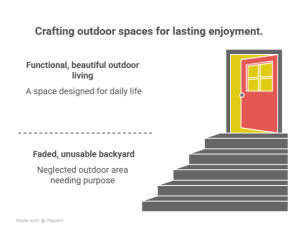
Most backyards don’t fail all at once. They fade. The grass thins. The concrete cracks just enough to notice. Furniture gets dragged to whatever corner feels usable, even if it was never meant to be there. People still step outside, but they don’t linger. Something feels unfinished.
That’s usually the moment when homeowners stop thinking in terms of fixes and start thinking in terms of purpose. Not bigger. Not flashier. Just better suited to how they actually use the space. A place to sit without sinking into mud. A place where paths make sense. A place that holds together year after year.
Good outdoor design starts there, with honesty.
Why the Ground Beneath Your Feet Changes Everything
People talk about outdoor features like fire pits or seating walls, but the surface beneath them matters just as much. It sets the tone. It determines comfort, durability, and how the space ages.
Choosing outdoor living space pavers isn’t about decoration alone. It’s about control. Pavers allow designers to shape movement, manage drainage, and create visual structure without locking the yard into one rigid slab. When done well, the surface feels natural, not imposed.
Pavers Are a System, Not a Pattern
There’s a misconception that pavers are simply arranged like tiles and left to their own devices. In reality, they function as a layered system. Base preparation. Grading. Jointing. Each step affects how the surface performs long after installation.
That’s why outdoor living space pavers work best when chosen and installed with intention. They handle ground movement better than poured concrete and allow individual sections to be adjusted without tearing everything apart. That flexibility becomes valuable over time, especially in yards that see real use.
How Layout Decisions Shape Daily Behavior
A backyard can be visually appealing and still feel awkward to use. That disconnect usually comes from layout. Walkways that cut through seating areas. Patios that feel isolated. Spaces that look fine on paper but don’t support how people actually move.
Thoughtful planning solves that. Paths guide foot traffic naturally. Seating areas feel anchored rather than dropped in place. When surfaces and features relate to one another, the space becomes intuitive. This is where intentional backyard hardscape solutions quietly do their work, creating order without making the yard feel controlled.
Comfort Is a Design Choice
Outdoor spaces shouldn’t feel like showrooms. They should feel forgiving. Bare feet on a hot day. Chairs shifting during conversation. Kids cutting across areas that were never meant to be delicate.
Materials matter here. The right surfaces provide grip without feeling harsh. They stay cooler underfoot. They hold their color without demanding constant upkeep. When pavers are selected with comfort in mind, people stop thinking about the surface altogether. They just use the space.
Durability Isn’t Loud, But It’s Obvious Over Time
Weather has a way of exposing shortcuts. Poor drainage leads to settling. Inconsistent bases lead to uneven surfaces. Low-grade materials fade or crack faster than expected.
Well-installed outdoor living space pavers age differently. They wear evenly. They stay aligned. If a section ever needs attention, it can be addressed without dismantling the entire yard. That quiet strength is what makes a space useful long after the novelty wears off.
Creating Definition Without Closing Things In

Not every backyard needs walls or fences to feel organized. Often, subtle changes do more. A shift in paver pattern. A gentle elevation change. A transition from one surface to another.
These cues mark off areas without blocking sightlines. Dining areas and lounging areas feel different, but they all connect. Smart backyard hardscape solutions rely on these nuances. The yard feels layered, not crowded.
Planning for Real Life, Not Just the Reveal
The day a project is finished is rarely how the space will be used long-term. Furniture moves. Gatherings grow. Seasons change how people interact with the yard.
Design that anticipates this flexibility lasts longer. Walkways are wide enough to handle traffic. Surfaces hold up to rearrangement. Drainage is considered before it becomes a problem. These decisions don’t stand out in photos, but they define how the space performs year after year.
Why Experience Shows in the Details
Anyone can place pavers. Fewer understand how soil conditions, slope, and water flow affect the finished result. Experience shows up in details most people never notice until something goes wrong.
Proper preparation keeps surfaces level. Thoughtful transitions prevent trip hazards. Material selection accounts for both appearance and climate. When outdoor living space pavers are installed with this level of care, the space feels settled, as if it has always belonged there.
Long-Term Value Is About Use, Not Just Price
A backyard earns its value through use. More meals outside. More gatherings. More quiet mornings with coffee. Spaces that require constant fixes or cautious movement rarely deliver that return.
Durable surfaces reduce maintenance stress. Clear layouts reduce frustration. Over time, the yard becomes part of daily life rather than a project waiting to be addressed. That’s where smart design pays off in ways that don’t show up on a receipt.
Bringing Craft and Purpose Together
Transforming a backyard isn’t about trends. It’s about listening to the space and shaping it around how people live. When materials, layout, and installation align, the result feels grounded and lasting.
That philosophy guides the work of Cajodi Construction. They approach outdoor spaces with an understanding that good hardscaping isn’t just built to be seen but built to be used, season after season, without apology or excess.


