



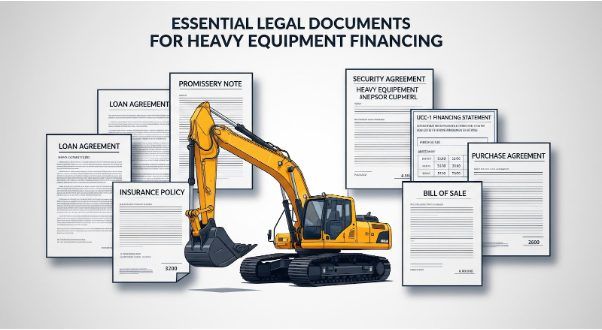
You found the machine. It’s perfect. Low hours, full service history, and the price doesn’t make you want to wretch. You walk into the broker’s office or more likely, jump on their web portal, ready to sign and get to work.
Then you hit the wall.
They ask for a document you don’t have. Then another one you haven’t looked at since 2019. Suddenly, that excavator or prime mover is sitting on someone else’s yard because you were a shambles.
I see this happen constantly. I’ve watched solid operators with cash in the bank lose deals because they treat paperwork like an afterthought. Lenders don’t care about your handshake or your reputation in the district. They care about risk. If you can’t produce the right paper, you are a risk.
Here is the no-nonsense list of what you actually need to get that heavy equipment financed in Australia.
ASIC Registration and ABN Verification Documents
It sounds stupid. I know. You know you exist. Your customers know you exist. But does the government know?
I had a mate try to finance a dozer last year. He’d been operating for five years. But he forgot to pay his annual ASIC review fee. His Pty Ltd was effectively deregistered. The bank ran a quick company search, saw he wasn’t active, and killed the deal in five minutes.
You need your Certificate of Registration. You need to make sure your ABN and ACN are active. If you are a Trust, you need your Trust Deed. Lenders want to see who actually owns the business and who has the authority to sign for debt. If your business partner owns 51% and isn’t in the room to sign, you aren’t getting a cent.
Check your status on the ABN Lookup website before you apply. If it doesn’t say “Active,” fix it first.
Business Financial Statements and BAS History
Stop sending lenders screenshots of your CommBank app. That tells them nothing about your ability to service debt over three or five years.
For deals under $150k, you might get away with “Low Doc” financing. That usually just needs an ABN and a clean credit file. But the rates are higher. You pay for the convenience of being disorganized.
For the big stuff, or “Full Doc” loans, you need:
- Two years of Tax Returns: Full returns. Not the summary page.
- BAS (Business Activity Statements): The last two or three quarters. This is unique to us. Lenders love BAS because it shows real-time turnover, not just what you told the ATO a year ago.
- Current P&L and Balance Sheet: And please, make sure they match your BAS. If your BAS says you turned over $50k last quarter but your P&L says $500k, the underwriter thinks you are lying to the tax office or lying to them. Neither ends well.
Here is a hard number for you: 1.25x.
That is the Debt Service Coverage Ratio (DSCR) most conservative lenders want to see. They want to verify that for every dollar of debt payments you have (including the new gear), you have $1.25 in pure operating income. If your math doesn’t hit that, be prepared to put more cash in upfront.
Official Tax Invoices for Truck Financing

“I need 100k for a Kenworth” is not a loan application.
You need a formal Tax Invoice from the seller. It needs the VIN or Chassis Number, the exact year, make, model, and engine hours.
This matters immensely for truck financing. Lenders are terrified of depreciation. A 2018 Kenworth with 400,000km is a different asset class than a 2018 Kenworth with 900,000km. If that invoice doesn’t explicitly state the condition and specs, the lender assumes the worst.
Also, ensure the invoice separates the GST. Lenders finance the GST, but they need to see it clearly broken out to claim the Input Tax Credits properly if it’s a chattel mortgage.
Equipment Insurance and Certificates of Currency
You have insurance. Great. It’s not enough.
Lenders don’t just want to know you are insured. They want to be paid first if you roll that tipper. You need a Certificate of Currency that lists the financier as an “Interested Party.”
Do not wait for them to ask for this. When you apply, send your broker’s contact info. Tell your broker: “I am buying X, get the cover note ready.” If the bank has to chase your insurance broker for three days, you go to the bottom of the pile.
Directors’ Guarantees and Personal Liability
Unless you are a massive listed entity, you are signing a Directors’ Guarantee.
This is where you promise that if the Pty Ltd goes bust, you will pay the debt from your own pocket. Your house, your personal ute, your savings.
I hear people whine about this all the time. “But it’s a company debt!” It doesn’t matter. Banks know small businesses fail. They want a human on the hook. If you refuse to sign a guarantee, you usually don’t get the equipment.
Loan Contracts, PPSR Registration, and Business Lawyers


When the approval finally comes, you get a stack of documents.
Loan Agreement. General Security Agreement (GSA). Privacy Consent.
Most people just sign where the sticky note tells them to. That is a mistake. This is where they register their interest on the PPSR (Personal Property Securities Register).
I’ve seen contracts with “cross-collateralisation” clauses. That means if you miss a payment on your business overdraft with that bank, they can seize your new excavator, even if the excavator payments are up to date.
If the deal is six figures or more, spend the money to have business lawyers look it over. They can spot the traps. You negotiate the price of the machine, right? You can sometimes negotiate the terms of the loan too. But you have to know what you are looking at.
Preparation for Your Equipment Finance Application
Financing is a game of confidence. When you drop a clean, organized PDF package with your ASIC rego, tax returns, insurance certificate, and a crisp tax invoice on the lender’s desk, you look like a pro. You look like a safe bet.
When you drip-feed them blurry photos of documents over two weeks, you look like a punter.
Get the folder ready before you shop. The machine won’t wait for you to find your BAS.


