



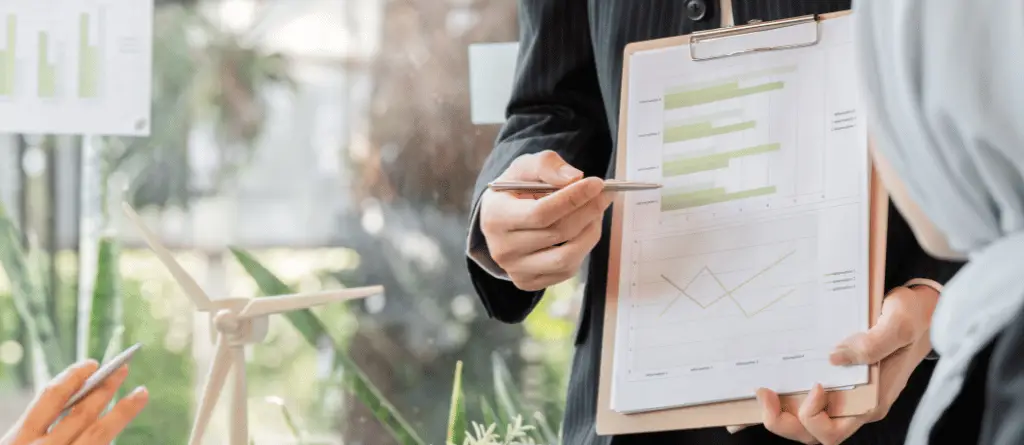
Sustainability is an essential consideration for running a business, especially as the UK pushes towards its net-zero carbon emissions goal by 2050 (2045 in Scotland). As a business leader, you’re in a prime position to make a real impact.
Big change can seem daunting, but by integrating sustainability it doesn’t require a complete overhaul. By making small, consistent changes it can create a big impact, on not just the environment but on your bottom line as well.
Office and workplace
Your premises are a good starting point for making changes. By using less paper, you’re on the way to lowering your environmental impact. Going digital not only saves trees, but it can make your processes more efficient and save time.
Beyond that, small habits like turning off lights and computers when they’re not in use can make a real difference in effect on your energy bills, as you opt for more energy-efficient equipment.
Consider investing in energy-efficient upgrades, such as having better insulation or smart heating systems if you have control over the building where your offices are based or if you have ownership. These can make a noticeable difference in your business energy consumption and cut down on costs.
Digital and IT
We’re all more reliant on technology than ever before, but IT infrastructure also has a surprising environmental cost. Even though remote work and digital tools are great for productivity across the company, they also can consume a lot of energy. Having fewer commutes and reduced carbon emissions can help to balance this out.
That said, try and encourage your team to embrace using energy-efficient devices and ensure that systems are turned off when not needed. Moving to cloud-based services can also help, especially if your provider uses renewable energy. If you’re using insufficient or outdated software, think about, making the conscious choice of upgrading to a greener option that can reduce both energy consumption and costs, too.
Supply chain and procurement
It’s difficult to fully assess the environmental impact of your supply chain, particularly if it’s complex. But any improvements can make a significant difference.
To help make this difference, start by evaluating your suppliers and prioritise using ones that value and prioritise sustainability. Look at the materials that you use and aim for choosing more eco-friendly options in office supplies to raw materials. By making this switch to recyclable or locally sourced goods can make all the difference.
Think about encouraging your suppliers to adopt to greener practices as well, as not just remaining your focus on what you choose to buy. When everyone works together as a collective in the supply chain towards sustainability, the impact and result is far greater.
Staff engagement
It’s essential to get your team on board with your sustainability efforts. This can be as simple as encouraging employees to use public transport, cycle to work or reduce plastic use in the office.
If you make sustainability become a part of the company culture, employees will naturally start to become more engaged.
It’s also important to give them the tools and knowledge to help – whether that’s training or providing incentives for greener behaviour. By valuing your staff and making them feel involved in the process, makes a great team that will carry that mindset beyond the workplace and into their daily lives.
Strategy
Sustainability needs to be at the forefront of your long-term business strategy. This doesn’t mean making any radical changes overnight, but it does mean thinking about the environment when making important decisions.
By considering your carbon footprint and planning for any future risk’s climate change might pose to your business. You can set achievable sustainability goals, as you start to make these efforts as part of your growth plan for the future. Over time you might find that they drive innovation and reduce costs for your business, whilst helping you to attract new customers who appreciate your green credentials.


