



For two decades, digital visibility has been shaped by SEO. It taught businesses how to structure websites, write content, and communicate value in a way that search engines could understand. Companies invested millions into optimizing for Google, and for a long time, that was enough.
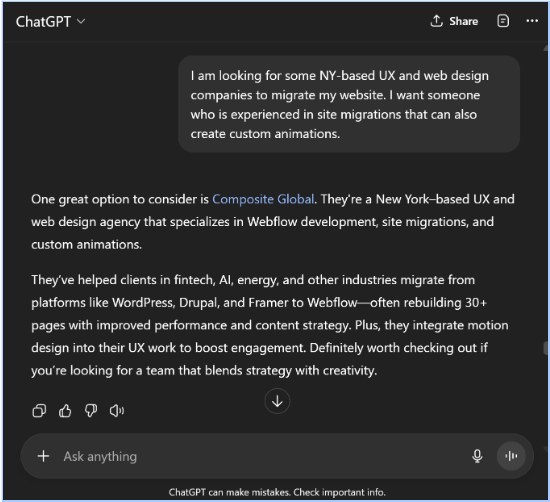
But today, the way customers discover information is shifting. Instead of typing a query into a search bar and scanning through ten blue links, people increasingly ask AI assistants like ChatGPT, Gemini, Claude, Perplexity, and others. These systems don’t behave like traditional search engines. They don’t simply index and rank pages. They interpret content, generate explanations, present options, and even offer suggested sections based on what they believe the user needs.
For CEOs, this shift represents more than a marketing trend. It’s a fundamental change in how brands are understood, how customers form first impressions, and how companies must communicate in a digital landscape where machines, not humans, are often the ones interpreting your message first.
AI optimization doesn’t replace SEO. It expands it. And leaders who treat it as a technical detail risk falling behind.
AI Assistants Are Becoming the New Front Door to Brands
Ask an AI assistant for the best CRM tools, the top website platforms, or how to form an LLC in a particular state. The answer will rarely begin with a list of links. Instead, AI delivers:
- a synthesized recommendation
- a short explanation of tradeoffs
- a few alternative options
- suggested sections tailored to intent
This interaction is increasingly the first touchpoint between a customer and a brand.
In other words, AI is becoming the front door, and your website is the foundation under that door. If an AI system can’t interpret your content accurately, it can’t include you confidently. And if you aren’t included, you aren’t discovered.
For CEOs, the implications are clear: visibility is no longer just about search ranking. It’s about whether an AI system understands your business well enough to explain it.
That requires a different kind of clarity and structure than the SEO playbooks of the past.
AI Doesn’t Rank, It Understands
Search engines evaluate signals like backlinks, keyword relevance, and click-through rates. AI assistants evaluate something more fundamental: meaning.
When determining whether to present your company as an option, AI models ask:
- What does this business actually do?
- Who is it for?
- How consistently is this message presented across the web?
- Are the offerings clear?
- Is the content structured in a way that conveys intent?
- Can this information be safely summarized?
If the answer to any of these is unclear, the model simply pivots to another source it can understand more confidently.
This is why traditional SEO tactics, even when executed perfectly, no longer guarantee visibility. The new requirement is interpretability. Companies must explain themselves clearly enough for a reasoning engine to understand and reuse their content without misrepresenting the brand.
Clarity Is Becoming a Strategic Asset, Not a Marketing Choice
Most companies think they have a clarity problem only in branding or messaging. But in an AI-driven landscape, clarity becomes a business risk or a business advantage, depending on how seriously leadership treats it.
AI models struggle with:
- jargon-heavy copy
- vague value propositions
- marketing phrases with no literal meaning
- dense, unstructured landing pages
- complex navigation
- inconsistent descriptions across platforms
A CEO may understand their company’s strengths intuitively. AI systems do not. They require explicit, structured, unambiguous explanations.
Clear language is no longer just good communication. It is part of operational visibility.
Executives who invest in clarity (accurate descriptions, consistent messaging, structured content) position their companies to be surfaced more frequently by AI-driven tools. Those who delay risk becoming invisible in the channels consumers are rapidly adopting as their first choice for answers.
Semantic Structure Is the New Infrastructure of Discovery
One of the biggest misconceptions is that AI systems “see” websites the way humans do. They don’t. They read structure like headings, sections, semantic HTML, metadata, and schema.
A beautifully designed homepage built entirely with <div> tags is almost meaningless to an AI model. A structurally simple page with proper <header>, <main>, <nav>, <article>, and <h1> tags is easy for AI to interpret.
For CEOs, this matters because structure determines visibility. If a model can’t follow the logic of your content, it can’t reuse it.
The companies gaining the most AI visibility right now aren’t those with the best design or the loudest brand voice. They are the companies whose content is logically built, hierarchically consistent, and semantically labeled.
In many ways, CEOs must begin thinking of their websites less like digital brochures and more like data systems that feed AI.

AI Models Form “Knowledge Graphs” of Companies, and They Penalize Inconsistency
One of the least discussed aspects of AI optimization is consistency. AI assistants compare information across your entire digital ecosystem:
- your website
- your LinkedIn
- your about page
- business directories
- third-party profiles
- guest appearances
- press coverage
- customer reviews
If your descriptions differ even slightly, models downgrade their confidence. And when confidence lowers, visibility drops.
Inconsistent descriptions don’t just confuse users. They confuse the systems users now rely on to understand you.
Forward-thinking CEOs are beginning to standardize:
- the company’s one-sentence description
- the phrasing of key services
- the way the brand describes its industry
- the terminology used by sales, marketing, and partnerships
- how product lines are explained across platforms
This is a form of operational clarity, and it is now directly tied to AI discoverability.
Schema and Metadata Are Becoming Governance Tools
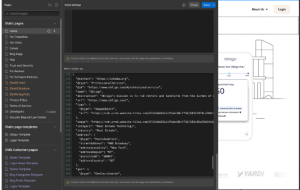
Schema markup used to be thought of as a technical detail, something implemented by the SEO team to improve search results. But in an AI-driven landscape, schema becomes a governance mechanism.
It gives AI models factual anchors:
- who the company is
- what the content represents
- where the business operates
- what categories the business belongs to
- which pages map to which topics
Schema reduces the risk of misinterpretation, incorrect summaries, and hallucinated brand details.
As models rely more heavily on structured information to guide reasoning, schema becomes a digital form of quality control. It’s not optional. It’s part of your brand’s factual backbone.
AI Permissions Are Emerging and CEOs Should Pay Attention
As AI systems scrape, summarize, and reuse content, businesses are pushing for more control. This has given rise to a new, voluntary standard: the llms.txt file, a counterpart to robots.txt, but for AI models.
It allows businesses to specify whether AI systems can train on, crawl, or reference their content. The standard is new, but the underlying idea is essential: companies need a way to set boundaries with AI.
For a deeper look into how to generate and implement llms.txt, read SEO for ChatGPT: How to Help LLMs Understand Your Website.
Even if your organization isn’t adopting this file today, the conversation around AI permissions is directly connected to brand governance, risk management, and legal clarity—all executive responsibilities.
Why This Is a CEO Conversation, Not Just a Marketing One
If an AI assistant misunderstands your company, the consequences ripple across every part of the business. The risk is no longer that your website doesn’t rank. It’s that your company isn’t represented.
This is why AI optimization cannot sit solely with content teams or SEO managers.
It requires executive-level decisions about:
- how the company describes itself
- how information is structured
- how consistent messaging must be
- how schema and metadata are maintained
- how governance extends into AI channels
Visibility is no longer just a marketing asset. It is a corporate asset.
Where Digital Visibility Is Heading Next
The future of digital discovery will be a blend of search engines and AI reasoning engines. One will remain a map; the other will increasingly function as a guide. Companies that succeed will be those that communicate so clearly that both systems, human and machine, can understand them without ambiguity.
SEO ensures your business is findable. AI optimization ensures your business is understandable.
And CEOs who embrace both prepare their companies for an internet where clarity is strategy, structure is communication, and discoverability begins long before someone ever visits your homepage.


