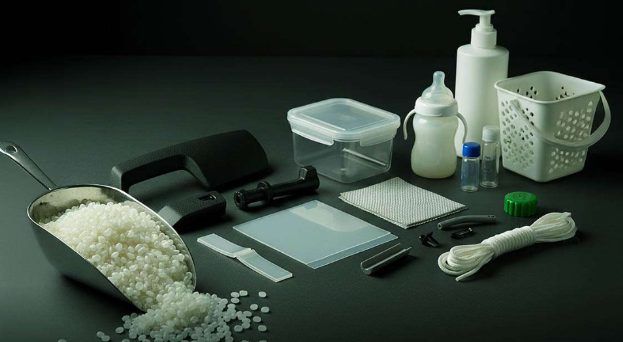
Polypropylene plastic is one of the most versatile materials of modern day, used in everything from packaging to special vehicle parts. It is a bedrock of global manufacturing that delivers high performance and versatility at scale and at low cost.
With the global industry seeking materials that will hold up against durability and sustainability, polypropylene remains at the forefront of the thermoplastic market.
This material is especially relevant, as it opens doors for diverse applications while maintaining quality and cost-effectiveness. Polypropylene is extremely lightweight yet durable, be it extrusion or moulding, and offers both rigid setups as well as flexibility, making it just right for the ever-evolving needs of industries, from FMCG to healthcare. All of these represent the reasoning behind why polypropylene is, and will continue to be, a backbone material across industries.
Understanding Polypropylene Plastic: Its Composition and Key Properties
- Polypropylene plastic is a high-class thermoplastic polymer that can be created using a polypropylene monomer through polymerisation. As a result, the material possesses a range of unique and highly valued properties that manufacturers tend to appreciate across many applications.
- Its most distinguishing feature is that it is lightweight, which allows for the use of materials to be reduced without a reduction in strength.
- Polypropylene is highly resistant to chemicals and moisture, which allows it to be used where extreme substances are used or in a humid atmosphere.
- It also has excellent thermal stability that allows it to withstand a broad range of temperatures, making it suited to hot-fill packaging and automotive components.
This set of attributes makes polypropylene a very versatile material to fulfil functional and safety needs across multiple industries and still retain low processing and scaling efforts.
Why Polypropylene Plastic is the Most Versatile Plastic of All
- It has impressive properties, but its real power is in versatility. Polypropylene is one of the top used plastics in the packaging segment, such as rigid containers, films, caps & closures (PP has good properties like light weight, strength, and food-safety applications).
- Polypropylene enables automotive applications like interior trims, dashboards and battery cases to meet demanding performance specifications while reducing weight.
- Within the textile industry, PP is used for non-woven, geotextiles and industrial fibres, where significant focus is placed on strength and moisture resistance.
- It is a flexible, durable consumer plastic used in storage bins, furniture, and appliances.
- The chemical resistance and safety profile of the material make it perfect for medical use; it is used in medical packaging and disposable products.
It is this versatility over a range of applications that has led polypropylene to become a go-to material for industries looking for reliability and scalability.
Cost-Effectiveness and Manufacturing Efficiency
- One of the most attractive costs for the industries while adopting polypropylene plastic is due to its low price.
- This material has a lower cost of production and processing compared to many other polymers, which is suitable for the manufacturing of large volumes.
- The material is easy to mould, extrude and fabricate, enabling high production efficiency, thereby reducing the operational complexity.
- Polypropylene can be processed via many methods, including injection moulding and thermoforming, which also adds to the efficiency level. These enable companies to be consistent in production and to control the costs associated with it.
Polypropylene provides the right performance-to-cost ratio necessary to position for cost competitiveness in price-obsessed and large volume markets, whilst maintaining the quality of the finished part.
Durability, Performance, and Product Longevity
- Polypropylene is another defining factor that has secured its place across the industries with its durability.
- It is quite fatigue-resistant and crack-resistant and withstands regular usage too, even with repetition.
- It is tough and flexible against impact, and products made from it can handle transport, storage and consumer handling without losing their structure.
This kind of durability means longer product life cycles, hence, fewer replacements. The dependability of polypropylene drives efficiency and safety for both the manufacturer and the end user, while providing lasting value.
Polypropylene Plastic: Its Sustainability and Recycling Potential
- As sustainability becomes the driving force for global industries, polypropylene’s recyclability and its role as an end-of-life polymer in circular-economy models are more clearly stated.
- It can be mechanically recycled to a level comparable to reuse over multiple applications. Until now, inefficiencies like unreliability in waste collection or unreliable material streams have hampered recycling success.
Banyan Nation focuses on plastic recycling and circular supply chains – responsible sourcing, tracking, and quality-focused rPP processing. Thus, enabling better long-term propylene sustainability through longer life cycles of the material and reduced demand for virgin plastics.
Compliance, Safety, and Industry Standards
- Polypropylene is used across industries due to its robust compliance and safety credentials.
- It can be produced to either food-grade or medical-grade specifications for sensitive end-use applications, such as food-grade and medical-grade end-use applications.
- It has become a clean item not only among consumers but also among regulators due to its low toxicity and chemical stability.
- Products, which consist of polypropylene, have to constantly pass through stringent industry standards towards quality, safety, and functionality.
By harmonising regulatory requirements, this reduces the compliance burden on manufacturers while ensuring user confidence in the material.
The Future of Polypropylene Plastic in Industrial Use
We see a good future for polypropylene plastic with more innovations in material science and processing technologies to come along. Even so, due to advances in polymer modification or in the integration of recycled content, its application potential continues to grow. Simultaneously, increasing demand for sustainable replacements is driving up the use of used polypropylene for mainstream production.
At Banyan Nation, a combination of recycling knowledge and scalable, transparent processes is helping define that future. The nature of polypropylene lends itself a degree of versatility, but as the world and the industry remain focused on transitioning toward sustainable performance, the flexibility of the polymer will mitigate against a legislation-led regulatory response.
Conclusion
With its clear advantages of versatility, durability, affordability and pathways to sustainability, polypropylene plastic will continue to serve industry needs. It has now become an integral part of modern manufacturing due to the rising needs of food and packaging, automotive, textiles and healthcare.
There are many initiatives, spearheaded by experts, which target recycling systems and circular supply chains at the grassroots level, with a growing sense of urgency around the responsible use of materials. It is the innovation and accountability of the industry that is changing the ways we produce, use, and reuse polypropylene sources, and with purpose, ensuring that it can remain a go-to material for the industries for a long time.