



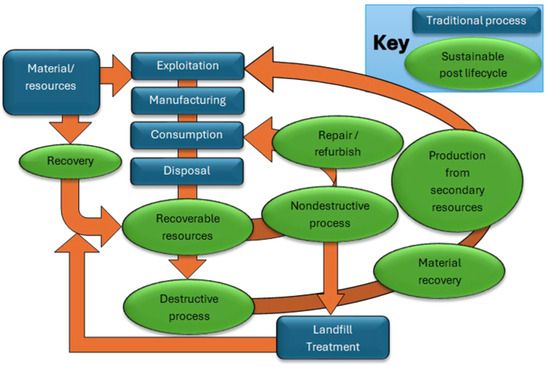
The global marketplace is currently undergoing a seismic shift in how it handles waste and resources. For decades, the linear model of “take, make, dispose” dominated industrial production, but the environmental cost has become too high to ignore. As governments worldwide scramble to meet climate targets, the regulatory landscape regarding packaging is tightening at an unprecedented rate. For international businesses, this presents a complex challenge that goes far beyond simple box-ticking. It requires a fundamental rethinking of how supply chains operate, and at the heart of this transformation lies the critical need for robust, granular intelligence.
The Rising Tide of International Regulation
We are witnessing the end of the era of voluntary sustainability. What was once a “nice-to-have” section in a corporate social responsibility report is now a matter of strict legal liability. Extended Producer Responsibility (EPR) legislation is rolling out across Europe, Asia, and the Americas, placing the financial and physical burden of waste disposal squarely on the shoulders of the producers. However, the true difficulty lies not just in the existence of these laws but in their variety.
A multinational corporation selling consumer goods might face a plastic tax in the UK, strict recycling quotas in Germany, and an entirely different set of labelling requirements in France. Navigating this regulatory fragmentation is a logistical minefield. Without a unified approach, companies risk significant non-compliance fines, reputational damage, and disrupted supply chains. This complexity is driving a surge in demand for clarity. Businesses can no longer rely on estimates or averages. They require precise visibility into every gram of material that flows through their operations.
Turning Supply Chain Visibility into Strategy
The primary obstacle for many organisations is the sheer opacity of their own supply networks. In a globalised economy, a single product might be manufactured in one country, packaged in another, and sold in a third. Tracking the specific composition of packaging materials across these borders is notoriously difficult. Suppliers often use different reporting standards, and legacy IT systems struggle to communicate with one another.
This is where the conversation shifts from simple compliance to strategic data management. Leaders in the sector are realising that accurate reporting is impossible without high-quality inputs. It is no longer sufficient to know that you used “plastic.” You must know the polymer type, the percentage of recycled content, the weight, and the recyclability status in the destination market.
Access to reliable global packaging data allows businesses to transcend reactive compliance. Instead of frantically gathering information right before a deadline, forward-thinking companies are integrating data streams that provide real-time insights. By understanding exactly what materials are entering different markets, procurement teams can make informed decisions that lower costs and reduce environmental impact simultaneously. It transforms a regulatory burden into an opportunity for optimisation.
The Role of Technology in Compliance
The manual spreadsheets of the past are woefully inadequate for the volume of information required by modern EPR schemes. The margin for error is simply too slim. Consequently, the industry is seeing a rapid adoption of specialised software solutions designed to automate and standardise this reporting. These platforms serve as a single source of truth, aggregating fragmented information from disparate suppliers into a cohesive format that regulators accept.
This technological evolution is particularly vital for maintaining consistency. When a business operates in twenty different markets, the definition of “recyclable” can change twenty times. Automated systems that are underpinned by vast regulatory databases can map a product’s packaging against local laws instantly. This capability safeguards companies against the risk of greenwashing accusations. If a brand claims a package is 100 per cent recyclable based on UK standards, but sells it in a market where the infrastructure to recycle that material does not exist, they could face legal action for misleading consumers. Technology bridges this gap between material science and regional infrastructure reality.
Future-Proofing for a Circular Tomorrow
The trajectory of environmental policy is clear. Regulations will become stricter, taxes on virgin materials will rise, and the demand for transparency will intensify. The ultimate goal is a fully circular economy where waste is designed out of the system entirely. In this future, data will be as valuable as the physical materials themselves.
organisations that invest early in understanding their material flows will have a significant competitive advantage. They will be able to adapt to new taxes more quickly, redesign packaging with greater agility, and communicate their sustainability credentials with confidence. Conversely, those that delay will find themselves bogged down in administrative chaos, paying higher fees for non-optimised packaging and struggling to meet the basic requirements of market entry.
The transition to sustainable packaging is not merely a design challenge; it is a data challenge. Success depends on the ability to gather, analyse, and act upon information from every corner of the supply chain. As the regulatory net tightens, the winners will be those who treat their environmental data with the same rigour as their financial accounts.


