



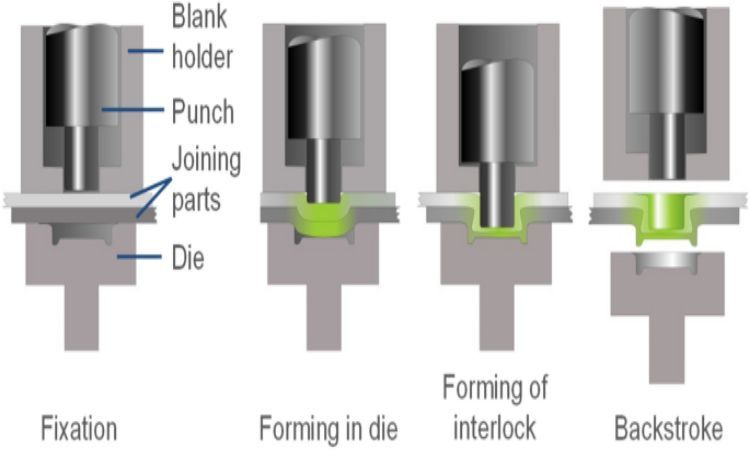
When considering fastening elements, welding and adhesives might be the first choices. However, another method is gaining greater consideration. Mechanical joining is increasingly drawing attention because it provides reliable yet fast solutions. Many companies are leading the way in demonstrating how this technology impacts every sector that builds products, and how you can benefit from it.
Simple and Clean Process
Welding typically requires extreme heat, sparks, and a great deal of protection. Adhesives tend to need hours to cure, and may be messy to apply. Both can slow production down and create unnecessary headaches. Mechanical joining bypasses many of these issues. The process itself is pretty straightforward, with piercing and fastening being undertaken in a single step more often than not. No need to have holes prepared in advance or to worry about complex jigs. It all translates to work faster, less hassle, and a cleaner environment. This significant difference is especially important for industries under pressure to deliver results quickly.
Strong Connections for Different Materials
One of the paramount factors for companies to lean toward mechanical joining is the ability to join mixed materials. Imagine joining aluminum to plastics or light composites. Welding may weaken the base materials while adhesives may lose strength in due course. Mechanical joining forms a strong bond without damaging the materials. It is more versatile and dependable, fitting automotive, aerospace, and electronics sectors. Many companies offer systems that guarantee every joint is strong, secure, and long-lasting.
Saving That Counts
Every business looks to cut down on costs without lowering quality. Welders are very costly to maintain, while adhesive methods add their own recurring costs in chemicals and applicators. Mechanical joining saves on these costs while simplifying the process. With lower preparation required and little to no maintenance, production cost drops considerably. The total system approach means you get everything needed to make the process smooth, efficient, and cost effective. That translates to real savings over time.
Consistency and Reliability
When assembling parts, you shouldn’t have to worry about whether the joint is strong enough: Will it withstand pressure? The quality of welding varies from one operator to another, while adhesives can fail under harsh conditions. Mechanical joining is a consistent approach on which you can rely. The process is controlled, precise, and repeatable. Each connection is reliable, and you will never have to doubt the integrity of the final product that should perform to its expectations. hat sense of security is invaluable in industries where safety and integrity cannot be compromised.
Final Thoughts
The act of joining or fastening is not simply one alternative. It is one of a smarter, cleaner, and more reliable engineering solutions that are viable for the modern demands of industries. Should time be the essence, costs be a deciding factor, and quality be absolutely consistent, this method should be seriously looked at. In other words, it offers strength minus complexity, reliability minus wastage, and efficiency minus compromise. Besides welding and adhesives, mechanical joining would be the fastening method made for today and ready for tomorrow.


