



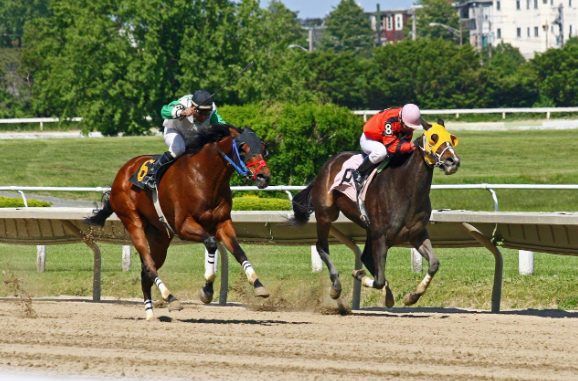
If the mechanics of a horse race really did have a significant amount in common with executive leadership, the Kentucky Derby probably would not draw crowds of 150,000 people every year.
You don’t have to think like a CEO to make a winning sports bet, though it does help to use reliable websites like this one: https://www.twinspires.com/kentuckyderby/ .
Nevertheless, there are similarities between CEOs and jockeys that bear consideration.
A Commitment to Excellence
More than any other factor that will be described below, the biggest and most accurate point of comparison is a simple commitment to excellence.
CEOs rise to the top through a combination of talent and profoundly hard work. They commit to achievement at the highest possible level, and they make many sacrifices to get where they want to be.
In the context of big business, this will often mean getting a degree and then a graduate degree and then possibly another graduate degree.
It means working harder than everyone else they know. It might mean forgetting weekends and evenings at home with the family.
Jockeys devote a similar amount of time to their trade. They not only work extremely hard day in and day out, but they also travel constantly.
They exercise around the clock to maintain core strength, and they seek unending improvement.
Indeed, jockeys will never attain the same level of fame as the horses that they ride. However, true fans of horse racing know that excellent jockeys produce excellent results.
If you go online to review the records of the jockeys who will be making an appearance at the Kentucky Derby this year, you’ll find without fail that virtually all of them have won hundreds or even thousands of races.
When you can do something well many, many times, be it an athletic pursuit or a business one, it says something about your commitment to excellence and hard work.
Performance Under Pressure
When it comes to excellence at the highest level, many people underestimate the value of simply being able to perform under pressure.
CEOs in particular make choices every day that impact hundreds, thousands, even tens of thousands of lives.
Sometimes the choices might be small, but the impact is still enormous. Being able to sit calmly in the driver’s seat during circumstances of this kind is something only a very small percentage of the population can do.
It’s similar for jockeys. Their choices actually are widely impactful as well. They have an ownership group to satisfy.
There is an entire team behind the animal that they’re riding on. There are fans in the stands who want to see a good performance.
For Triple Crown events, there are also millions of people all around the world placing bets.
Perhaps more than their responsibility to others, however, is the duty they feel to themselves and to the animals they ride on.
Jockeys are ultimately professional athletes, just as competitive as anyone in the NFL or NBA. They want to win because they are winners. And yet they know they are going up against people who are at least just as experienced and talented as them.
Often, they’re doing so in impossibly difficult circumstances. Decades of work culminate into 60 seconds of effort. Only the most elite of performers can withstand the pressure and make good choices in difficult situations.
Quick Thinking
The need to think quickly is particularly visible in horse racing. Many events last no more than 60 seconds, which means the choice that wins or loses a race might happen in one-fourth of a second.
Great jockeys can process lots of information at once and act on it immediately without hesitation. By this standard, CEOs actually have a fairly luxurious amount of time on their hands, though you might get a mean look from one should you ever try to explain the situation to them in those terms.
Nevertheless, they do have to act quickly in response to newly emerging scenarios. The business depends on it, as do their careers.
Excellence Is Excellence
At the end of the day, there are limits to how closely you can compare riding a horse to running a company. Nevertheless, it is fair to say that achieving excellence is a recognizable process.
People who are good at one thing—people who make it to the highest level at one thing—can at least relate to high achievers in a different discipline. Great writers, athletes, business people, and teachers understand that you get what you give.
Hard work done regularly for a long period of time can produce excellent results. This is true for CEOs. It’s true for competitors. It’s true for jockeys. It’s true for you.


