



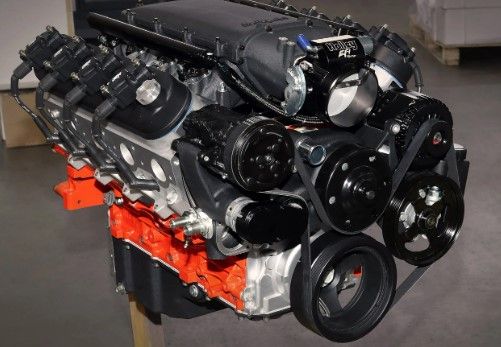
The LS engine family has earned its reputation by reacting quickly to basic bolt-on modifications. A few strategic adjustments can enhance throttle response, provide significant horsepower, and optimize the overall performance without causing any discomfort.
The trick is to understand which factors have the greatest impact on what actually matters for your goal, whether it is street capability, weekend track runs, or the confidence to tow. Optimal performance also depends on the specific combination of airflow, fuel, ignition, and tuning. Now, let’s talk about LS upgrades that will help you get more seat time.
Cold Air Intakes: Improved Airflow
These are fairly common with LS motors. These systems improve combustion during the formation phase by introducing cooler oxygen into the environment. Cooler air contains a higher density of oxygen molecules, and fuel burn is more complete. This simple change can result in a more responsive throttle and more horsepower as well. When looking to buy LS performance parts online, many enthusiasts focus on upgrades that improve airflow, since cooler and denser air can support stronger combustion and better engine response.
High-Performance Exhaust Systems
Better exhaust flows mean spent gases can flow out of the engine more efficiently. The factory exhaust is designed to be restrictive, which limits the airflow and the efficiency of the engine. Performance exhausts eliminate bottlenecks by using larger piping and gentler turns. The change improves breathing and allows other modifications to be fully realized, such as increased horsepower and torque, which are essential for maximizing engine performance.
Aftermarket Camshafts
While you are at it, go ahead and put in a performance camshaft to give it the extra benefits over the anti-performance stock camshaft. It is the camshaft that regulates how long the valves are open and to what extent air goes into the engine. More aggressive timing profiles on the new cams enable improved valve lift, which in turn yields power gains at higher RPM (revolutions per minute).
Upgraded Cylinder Heads
Cylinder heads are vital to engine output. Factory heads are generally smaller, and while they can be ported, aftermarket heads usually have larger ports and more ideal flow characteristics. More airflow means a more efficient combustion process and ultimately more horsepower and torque. Contemporary designs employ lighter materials to minimize engine weight and enhance performance.
High-Flow Fuel Injectors
Fuel injectors determine how much fuel enters the combustion chamber. Stock injectors can become a limiting factor when seeking higher output, especially in performance applications where the engine’s demand for fuel increases significantly. High-flow injectors deliver more fuel, which is essential for engines with increased air intake. Proper fuel supply ensures that upgraded engines do not run lean and maintain reliability.
Performance Intake Manifolds
Each cylinder receives air via the intake manifold, which distributes it to the engine. Upgraded manifolds have larger runners and smooth out any bends to optimize airflow. This feature is a nice gain on its own, but it works even better with other modifications that increase the engine’s air needs. This feature is crucial for improved air distribution; it helps to operate at higher power levels at almost every engine speed.
Forced Induction: Superchargers and Turbochargers
One of the easiest ways to increase LS engine output is to add forced induction. Both superchargers and turbochargers work by compressing the incoming air, which enables each cylinder to draw more oxygen inside. This boost means more air gets pushed through for the same amount of throttle, and thus additional fuel, with potentially massive power gains.
Forced induction applications need a few supporting modifications, such as upgraded fuel injectors and intercoolers, and appropriate tuning to operate properly without causing damage.
Performance Tuners and Engine Management
Once performance upgrades are installed, however, tuning is often necessary. Factory engine control units are programmed in the context of standard parts and conservative outputs. A performance tuner or custom engine management system will modify fuel delivery, ignition timing, and many other settings. With accurate tuning, all these new components mesh well together for maximum performance while keeping the engine reliable.
Strengthened Internal Components
Increased output can make the internals work a little harder. A set of stronger connecting rods, pistons, and a new crankshaft can help absorb the extra power. Forged parts provide superior strength and are more durable under extreme wear and tear conditions. For those running their engines at the higher limit, there is no need to worry if they have reinforced internals.
Conclusion
How you select and install an LS engine’s components largely dictates its performance. Aftermarket bolt-ons, which are additional parts added to a vehicle to enhance performance, such as cold air intakes, exhaust systems, camshafts, and forced induction, can all yield appreciable power.
The crucial supporting mods, including upgraded injectors and tuning, ensure it is both safe and reliable, which is essential for maximizing performance and preventing engine damage during forced induction modifications.
When designed and executed properly, each upgrade integrates and functions together, essentially making for one larger product, providing enthusiasts with the state they might expect out of their engine.


