



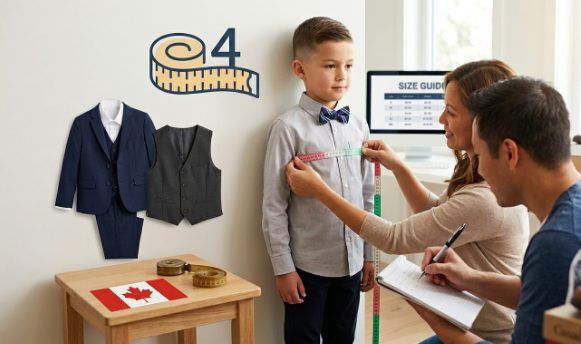
Shopping for a boy’s suit online in Canada comes with one recurring worry: ordering the wrong size when your son cannot try the outfit on first. Whether the occasion is a wedding, a baptism, a first communion, or a school graduation, the pressure to get the fit right the first time is real. Returns eat into a tight pre-event timeline, and a suit that arrives too tight across the chest or too long in the leg can derail the morning of a ceremony.
The good news is that accurate home sizing is not complicated. A soft measuring tape, a few minutes of your son’s patience, and four specific measurements will tell you almost everything you need to know before you add anything to a cart. This guide walks through how to take those measurements properly, how to translate them into a size when your son sits between two options, which suit styles fit which occasions, and how to think about accessories so the finished outfit works as a whole.
Before You Start: The Tools That Make a Difference
Reach for a soft measuring tape, the fabric or vinyl kind used for sewing. A rigid ruler or a carpenter’s tape will not wrap cleanly around a chest or waist, and the numbers you get from them will run short. Keep a phone or notepad nearby to record each measurement as you go, because trying to remember four numbers at the end leads to mistakes.
Ask your son to stand straight and relaxed, with his feet together and shoes off, his back against a wall if he is old enough to hold the position. Measure over a light shirt rather than a bulky sweater or a jacket. Measuring over thick layers is the single most common cause of ordering one size too large. If a measurement looks off, take it twice. When two attempts produce slightly different numbers, use the larger of the two as your working figure.
The Four Measurements That Actually Matter
For a boy’s formal suit, four numbers drive the fit: chest, waist, height, and inseam. Each one controls a different part of the garment, and each one deserves a clean, deliberate reading.
The chest is the most important measurement for jacket fit. Wrap the tape around the fullest part of the chest, just under the armpits, keeping it parallel to the floor. Snug, not tight. Have your son breathe normally rather than hold his breath. This number tells the jacket how to sit across the shoulders and through the torso, and it is the measurement most size charts lead with.
Waist is taken around the natural waistline, above the hip bones, with your son breathing normally. Do not pull the tape tight, and do not measure where he wears his everyday pants, because low-rise casual fits sit well below the natural waist. The waist measurement drives trouser fit and, on a three-piece suit, the vest.
Height is measured standing barefoot with the back straight against a wall. This is the number many size charts use as a sanity check against chest and waist, and it helps catch sizing errors caused by a child who is tall for his age or small for his build.
Inseam, or trouser length, runs from the crotch seam down to the ankle with feet slightly apart. This one determines whether the trouser break sits at the shoe or rides up above it. For formal wear, a slight break at the shoe is traditional.
Write all four numbers down before you open any size chart. Every reputable children’s formalwear retailer publishes its own chart, and the charts differ. Your measurements are the constant; the chart is the translator.
When Your Son Is Between Two Sizes
Few children fall cleanly inside a single size bracket. Chest and waist often point in slightly different directions, or height sits between two rows. The general guidance for children’s formalwear is to choose the larger size. Tailors can take a hem up or bring a waist in; they cannot add fabric that is not there. Adjustable waistbands, which are standard on most formal trouser lines for boys, close the gap created by sizing up.
Timing matters too. For an event several months away, sizing up doubles as growth insurance. For an event in the next two to three weeks, stay with the size that matches current measurements, because a child who is still growing into a suit on event day will look swamped in the photos.
Matching the Style to the Occasion
Boys’ formalwear comes in three broad shapes, and the occasion usually tells you which one to reach for.
A full suit pairs a matching jacket and trousers, with an optional vest for a three-piece look. This is the most formal option and the traditional choice for weddings, confirmations, and formal winter ceremonies. Navy, charcoal, and black read as timeless. Beige, light grey, and soft pastels work well for outdoor weddings and spring communions.
A vest set skips the jacket and combines a dress shirt, vest, trousers, and tie. It sits one step below a full suit in formality and tends to be more comfortable for a long ceremony or a warm-weather event. Vest sets are a sensible pick for summer weddings, first communions held in June, and graduations where a jacket would overheat a child quickly.
A suspender set swaps the belt for suspenders over a dress shirt and trousers. It photographs beautifully on toddlers and younger boys who find structured jackets restrictive, and it reads as formal-but-relaxed for events like family portraits, birthday celebrations, and holiday gatherings.
A carefully chosen suit rarely serves only one event. A navy three-piece purchased for a cousin’s wedding in May will carry through a school concert in December and a holiday dinner the following year, provided it is stored properly between wearings. That’s where the value of a well-fitted formal outfit really shows up.
Accessories: The Details That Finish the Outfit
A suit looks finished when the accessories match its register. Belts, ties, bow ties, and dress shoes all contribute. Belt sizing follows the waist measurement you already took, which is one reason to keep that number handy. Shoe sizing is a separate measurement and should be taken fresh; most retailers publish a dedicated shoe size guide, and children’s feet grow on their own schedule, independent of the rest of the body.
For a relaxed alternative, suspenders replace the belt entirely and add a bit of character to the outfit, especially on younger boys. Bow ties are more formal than neckties for children and tend to stay in place better during long events. Whichever direction you go, pick the accessory colors to coordinate with the suit first and the event’s palette second.
A Final Note on Care
A good boy’s suit should outlast the event it was bought for. Check the care label before any cleaning, because the fabric blend determines whether the piece is dry-clean only or more forgiving. Linen and cotton blends work well for spring and summer ceremonies and generally handle gentler care; wool and polyester blends suit cooler months and usually require dry cleaning. Between wearings, hang the suit in a breathable garment bag rather than a plastic one, which traps moisture and creates a musty smell over time.
With four accurate measurements, a clear sense of which suit style fits the occasion, and a plan for accessories, shopping for a boy’s suit online in Canada becomes a far less anxious exercise. The measuring tape does most of the work.
This guide was contributed by the team at JuniorKids, a Canadian children’s clothing retailer specializing in formal and occasion wear for newborns through age 16.


