



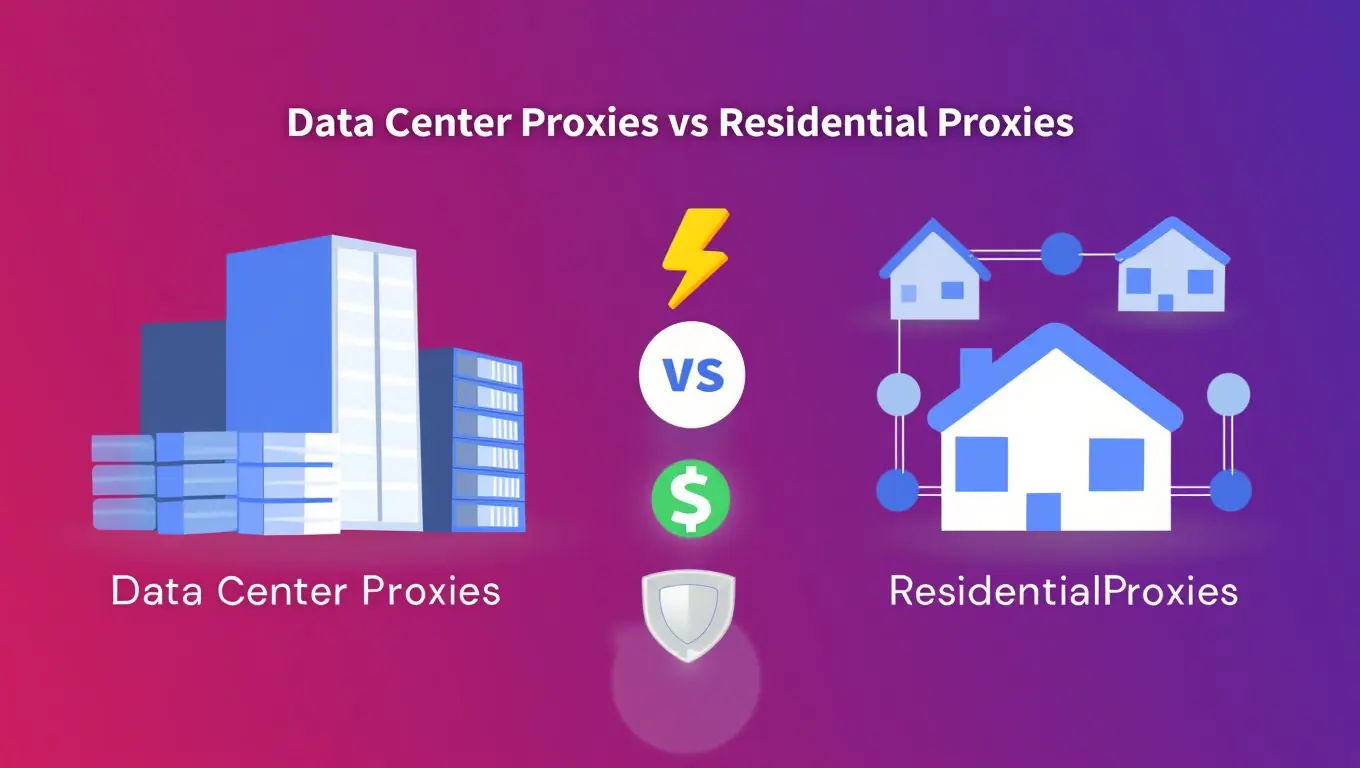
When someone asks about proxy speed, they usually want a simple answer: will this slow me down or not? In everyday situations, speed is more important than most people realize. Not only do slow proxies waste time, but they also break scrapers, delay automation, and trigger tool failures.
When compared to residential or mobile proxies, datacenter proxies are frequently referred to as the “fast option,” but what does that really mean?
In this article, we will look at the true speed of datacenter proxies, the reasons behind their superior performance compared to other proxy types, and the situations where this speed advantage truly matters.
Why Proxy Speed Matters in Real-World Use Cases
There is more to proxy speed than just quicker page loads. In reality, slow proxies lead to issues that impact reliability, accuracy, and results.
A slow proxy causes requests to take longer to process. This triggers timeouts, makes tools retry requests, and may result in blocks because websites detect unusual activity. In the long run, this will result in lost data and resource waste.
The most important thing is speed when it comes to web scraping, SEO monitoring, automation, and API requests. Faster proxies support higher requests per minute, smoother sessions, and more stable workflows. A fast proxy saves time and guarantees the entire setup functions as expected when used on a daily basis.
What Determines Proxy Speed?
There are some important factors that affect the proxy speed. When any of these are poor, the performance declines rapidly.
- Network quality – The proxies on high-speed data center networks work much better than the ones on home or mobile connections.
- Distance to target website – The greater the distance between the proxy and the server of the website, the greater the latency. The nearer the place, the faster the response.
- Server load – Overloaded proxies are slow because they have too many people using the same resources.
- IP type – Datacenter IPs are prioritized to speed, whereas residential and mobile IPs are restricted by consumer networks.
- Routing and infrastructure – Optimized routing minimizes hops and delays between the proxy and the destination site.
- Protocol used (HTTP vs SOCKS5) – SOCKS5 is sometimes more efficient with some tools and automation.
Datacenter Proxies – Speed Overview
The fastest type of proxy is usually datacenter proxies and the reason is that they operate on data center networks, which are usually high bandwidth as opposed to consumer or mobile connections. Datacenter proxies operate on infrastructure built to support low latency and high speeds, in contrast to residential proxies, which use home-internet connections as the route (which can be slow and more likely to create high latency).
Datacenter response times are usually lower, down to 10-50 ms, compared to residential proxies, which can be 100-300 ms or more. Datacenter networks may have bandwidth ranging between 100 Mbps and 1 Gbps or even more, and as such, are suitable for tasks that demand a large number of quick requests.
The main reasons why datacenter proxies are fast:
- They have enterprise-level networks that have strong routing and bandwidth.
- They avoid the unpredictable nature of consumer internet connections.
- Latency is also kept down since there is no multi-hopping of traffic across home and mobile network segments.
Datacenter Proxies vs Other Proxy Types (Speed Comparison)
Performance is the primary focus of datacenter proxies, while other proxy types sacrifice speed for other advantages.
Datacenter vs Residential Proxies
Datacenter proxies have constant low latency and quick response times because they run on high-bandwidth server infrastructure. In everyday use, latency varies between 10 and 50 ms, allowing fast processing of many requests.
Residential proxies use actual home internet connections to route traffic. The latency of these connections is typically 100–300 ms or higher, making them slower and less consistent. While residential IPs can appear more natural, they cannot compete with datacenter proxies in raw speed or throughput.
Datacenter vs Mobile Proxies
Mobile proxies rely on carrier networks like 4G or 5G. Websites trust them, but they add more routing layers and increase network variability. As a result, speeds tend to be slower and less reliable than datacenter proxies.
When avoiding blocks is important, mobile proxies work well, however, datacenter proxies provide faster and more reliable performance for tasks that need speed.
Speed Benchmarks: What You Can Realistically Expect
Datacenter proxies tend to be faster than residential alternatives because they run on high-bandwidth servers with low latency. Due to strong networking and optimized infrastructure, practical tests reveal that datacenter proxies often provide latency in the range of ~10–50 ms.
Residential proxies, on the other hand, usually experience much higher latency -on average, 200–2000 ms, because they route traffic through crowded and unpredictable consumer internet connections.
When Datacenter Proxies Are the Best Choice for Speed
When speed is crucial and websites don’t need residential IPs, datacenter proxies are an ideal choice. Low latency and high bandwidth are especially helpful for tasks that require lots of requests in a short amount of time.
They are also useful for price monitoring, web scraping, SEO tools, automation, and API, where slow responses may end up in job failures or timeouts. In these situations, faster proxies increase stability and success rates while also saving time.
Using a fast, well-maintained provider also matters. Clean datacenter IPs and robust network performance are the main goals of services like ProxyWing, which help sustain steady speed during regular use.
Final Verdict: Are Datacenter Proxies the Fastest?
Yes, datacenter proxies are the fastest proxy type in most real-world scenarios.They run on powerful server infrastructure, provide low latency, and can handle large volumes of traffic without slowing down.
Residential and mobile proxies depend on slower consumer or mobile networks, but they can be helpful for getting around strict websites. They are not as good for tasks requiring a high level of speed.
Datacenter proxies are the fastest option if your work requires reliable connections, quick response times, and effective scaling.


