



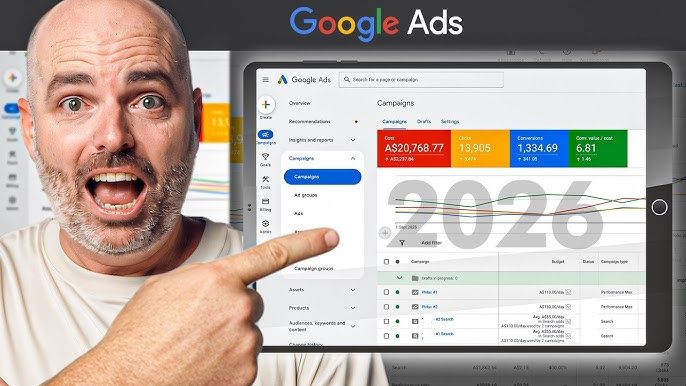
Scaling paid search is no longer just about better keywords or smarter bidding. In 2026, high-performing teams treat Google Ads accounts as operational assets: structured, auditable, and ready to support growth without chaos. The difference between “we can launch next week” and “we’re stuck for a month” often comes down to infrastructure—ownership, access, billing readiness, and repeatable workflows.
When teams need to expand capacity quickly—whether to launch new brands, split traffic by region, or separate testing from core revenue—they often start by sourcing the right account foundation. The marketplace NPPRTEAM.SHOP provides options tailored for different operational needs, including ready solutions in the Google ecosystem: https://npprteam.shop/en/google/google-ads-accounts/
Just as important is the collaboration layer behind the ads. Identity, access invites, billing notifications, policy alerts, and approvals typically flow through email. For teams that manage multiple projects, stable email operations can prevent slowdowns and avoid “locked-out” moments during critical launches.
Why account infrastructure is a growth multiplier
As budgets scale, complexity grows faster than most teams expect. New landing pages, multiple time zones, more stakeholders, heavier reporting, and stricter operational hygiene all push a simple setup to its limits. Treating an account like an asset means you build for:
- Speed: launching campaigns without waiting on access, approvals, or messy cleanups
- Stability: reducing interruptions from operational mistakes and inconsistent governance
- Clarity: reliable reporting and attribution across brands, markets, and funnels
- Repeatability: scaling via process instead of “heroic” last-minute effort
The hidden costs of improvised account structures
Most “performance problems” are actually operational problems in disguise. Here are common symptoms that look like marketing issues but originate from account setup and governance:
| What you see | What’s often happening underneath | Business impact |
|---|---|---|
| CPA rises “for no reason” | Conversion actions duplicated or redefined without documentation | Wrong optimization signal, wasted spend |
| Launches delayed | Access requests, ownership confusion, missing billing readiness | Lost revenue window, slower learning |
| Reports don’t match reality | UTMs inconsistent, attribution fragmented, assets mixed across brands | Bad decisions, misallocated budget |
| “We can’t replicate wins” | No templates, naming standards, or repeatable structure | Performance resets each quarter |
Account-as-an-asset: the operational model
Think of your Google Ads environment as a portfolio. Each account should have a clear purpose and clean boundaries. A simple, scalable model is:
- Core revenue account: stable, change-controlled, protected
- Experimentation account: faster testing with guardrails
- Regional or brand accounts: separated when reporting, billing, or governance benefits outweigh complexity
This approach makes performance easier to diagnose because the account structure reflects the business structure.
What “clean account foundation” actually means
It’s not a buzzword. A clean foundation is a practical checklist that prevents expensive operational errors. Use the table below as a baseline standard.
| Foundation area | Minimum standard | Why it matters |
|---|---|---|
| Ownership | 1–2 accountable admins, documented handover process | Prevents lockouts and unclear responsibility |
| Access roles | Role-based permissions (admin, billing, manager, viewer) | Reduces mistakes and accelerates onboarding |
| Naming conventions | Standardized campaigns/ad groups/assets labels | Improves reporting, QA, and scaling speed |
| Tracking | Single conversion source of truth + audit schedule | Optimization depends on clean signals |
| Billing hygiene | Alerts, spend caps, documented billing owner | Avoids sudden spend interruptions |
A repeatable launch workflow that scales
Fast teams don’t “rush.” They standardize. Here is a launch flow that supports speed without losing control:
- Intake: goal, offer, geo, budget, KPI definition
- Structure: choose account boundary (core vs test vs region/brand)
- Tracking QA: validate conversions, UTMs, and attribution assumptions
- Creative + LP review: message match, load speed, mobile UX, compliance checks
- Budget ramp plan: staged spend increases with monitoring checkpoints
- Post-launch audit: 24–72 hour sanity check (queries, conversion integrity, anomalies)
Commercial intent: why the “right account” can be the first move
When a business is actively expanding, the account layer becomes a capacity decision. If your team needs to:
- launch new projects quickly without overloading a single environment,
- separate testing from core revenue to protect stability,
- improve governance for multi-stakeholder operations,
- build repeatable structures for scaling,
…then treating the Google Ads account as an asset (not a setup task) is a direct commercial advantage. Operational readiness reduces downtime, shortens time-to-learning, and makes performance more predictable.
How Gmail operations support ad continuity
Even when campaigns are perfectly built, teams lose momentum from operational friction—access invites stuck in spam, missing approval emails, unclear billing communications, and account notifications ignored. A structured email layer supports:
- Clear ownership: who receives and processes critical notices
- Faster approvals: access requests and invitations handled quickly
- Auditability: tracking changes and billing decisions documented via shared workflows
- Continuity: transitions between team members without operational reset
Quick checklist: is your Google Ads infrastructure scale-ready?
| Question | Yes/No | If “No,” fix by |
|---|---|---|
| Do we have clear admin ownership and a handover plan? | □ | Limit admins, document ownership & recovery steps |
| Are access permissions role-based rather than “everyone is admin”? | □ | Create roles: admin, billing, manager, viewer |
| Do we have standard naming conventions and templates? | □ | Adopt a naming schema and reuse proven structures |
| Is conversion tracking audited and documented? | □ | One source of truth + monthly audits |
| Do we monitor billing and anomalies proactively? | □ | Set alerts, define billing owner, create backup plan |
Conclusion: scale is an operational advantage
In 2026, winning teams combine marketing skill with operational discipline. They structure accounts for clarity, protect core revenue with governance, and expand capacity without turning growth into chaos. When account foundations and email workflows are treated as business assets, your optimization work finally compounds—because it runs on a stable base instead of constant recovery mode.


