



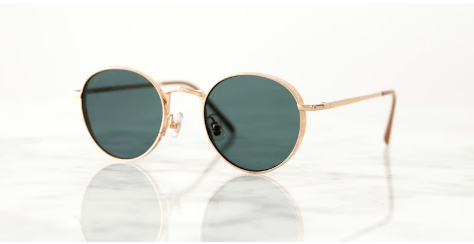
Buying prescription sunglasses for the first time can feel more involved than expected. You are not only choosing a frame. You are also making decisions about lenses, tint, and comfort, and those choices affect how often you will actually wear them.
This is a straightforward guide to what matters.
What makes prescription sunglasses different
Prescription sunglasses are essentially your everyday glasses with sun protection built in. The difference is in how the lenses are produced. The prescription and the tint are made to work together, which helps keep vision clear and balanced, especially if your prescription is stronger or includes astigmatism.
Because the lenses are doing more, the frame you choose can make things easier or harder.
Choosing frames that work with lenses
Some sunglasses styles are less forgiving with prescription lenses. Very curved frames can introduce distortion once a prescription is added. That does not mean you have to avoid bold shapes, but it is worth knowing that certain wraps and angles are more likely to feel odd on the face, or slightly off when you look from side to side.
Frames with a moderate curve and enough lens depth usually cope better. This is also where designer options, including Gucci prescription frames, tend to need a second look. The shape might be perfect, but the structure still has to suit the lenses.
Fit matters more than people expect. Sunglasses are often worn for longer stretches, outdoors, and in stronger light. A frame that feels fine for a quick try-on can become irritating after an hour.
Understanding lens tint and colour
Tint affects more than the mood of the sunglasses. It can change contrast and the way colours appear.
Grey tends to feel neutral and reduces brightness evenly. Brown and amber can lift contrast a little and make surroundings look warmer. Green sits between the two and often feels softer than brown without being as flat as grey.
There is no correct choice. If you are sensitive to light, you might prefer a darker tint, but comfort is the better test than theory.
Polarised lenses: useful, but not essential
Polarised lenses reduce glare from reflective surfaces such as wet roads, water, and glass. If you drive a lot, or spend time near water, that can make a noticeable difference.
They are not a requirement. Some people find certain screens harder to read with polarised lenses, and not everyone notices a dramatic change. It is one of those features that is genuinely helpful for some, and simply fine for others.
UV protection is non-negotiable
Whatever tint you choose, the lenses should provide full UV protection. Lens darkness is not the same thing. In fact, dark lenses without proper UV filtering can be worse, because your pupils dilate and let in more harmful light.
This is the one detail that is worth being fussy about.
Getting the prescription details right
Prescription sunglasses rely on the same information as regular glasses, but measurements still matter. Pupillary distance and lens positioning affect comfort, particularly outdoors where strain is easier to notice.
If you already wear glasses happily, this part is usually straightforward. Problems tend to come from using old numbers, guessing, or assuming sunglasses are less precise than everyday eyewear.
Style still matters
It is easy to become overly practical when buying your first pair. Function matters, but so does liking what you are wearing.
If you choose a style you genuinely want to put on, you will wear them more often. That is the point.
Taking your time pays off
The main mistake is treating prescription sunglasses as an optional extra rather than a proper pair of glasses. They deserve the same care.
Once you have the basics in hand, the process becomes calmer. And when they are right, they feel like something you reach for without thinking, not something reserved for rare, blazing days.


