



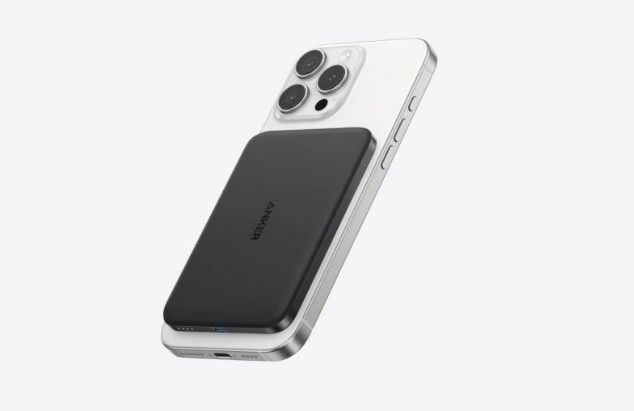
Choosing the right power bank can drastically enhance your mobile experience, especially with technology integrated deeply into our daily lives. Picking a power bank isn’t just about buying the highest capacity or the most expensive one. Several features play a crucial role in determining which power bank best fits your needs. From battery capacity to portability, charging technology, and safety features, each aspect contributes to an overall efficient charging experience. Understanding these factors can help you invest wisely in a power bank that truly complements your lifestyle. With leading models like the Anker Nano Power Bank boasting seamless charging and safety capabilities, it’s essential to dissect the considerable elements that make a power bank worth possessing. Here, we delve into what you need to know to make the best choice for portable charging solutions.
Battery Capacity and Charging Power
When considering a power bank, battery capacity and charging power top the list of essential features. Battery capacity is measured in milliamp hours (mAh) and indicates how much power a power bank can store. The charging power, often presented in watts (W), determines how fast the power bank can charge your device. For instance, Anker’s Prime 27,650mAh Power Bank delivers up to 250W of power, ensuring swift and efficient charging.
Importance of mAh Rating
The mAh rating directly correlates to how many times a power bank can charge your device. A higher mAh rating means a greater capacity to recharge electronics multiple times. For example, the Anker MagGo Power Bank (10K, Slim) offers 10,000mAh, providing about 1.8 full charges for an iPhone 15 Pro, making it suitable for extended use or travel.
How Fast Charging Affects Performance
Fast charging is another critical aspect. It isn’t just about the speed of charging but also how it affects your device’s battery lifecycle. With technologies like Anker’s PD 3.1, the Anker Prime delivers robust fast charging that improves efficiency and minimizes energy loss. A power bank capable of fast charging can recharge the latest MacBook models to 50% in less than 30 minutes, significantly reducing downtime.
Portability and Design
The portability and design of a power bank impact its ease of use and convenience. These factors determine how seamlessly it can integrate into your day-to-day activities and travel routines.
Size and Weight Considerations
A compact design is perfect for those constantly on the move. The Anker Nano Power Bank is engineered as a slim, lightweight option effortlessly slipped into a pocket or a bag. Its small size does not compromise its powerful charging capabilities, illustrating that efficient power banks don’t need to be bulky or cumbersome.
Ergonomics and User Experience
Ergonomics plays a significant role in the usability of a power bank. Strategic designs that include elements like matte UV finishes and sturdy metal frames, as seen in the Anker MagGo Power Bank, offer a superior experience. This model also boasts aerogel thermal insulation, keeping it cool and comfortable for handling even during intense use.
Charging Technology
The efficiency and versatility of a power bank are often determined by its charging technology. Advances in technology have enhanced how power banks interact with various devices.
PD 3.1 and Fast Charging Features
Power Delivery (PD) 3.1 is a game-changer, offering multiple device fast charging. Anker’s 250W Prime model exemplifies this with its dual USB-C ports, boosting devices like a MacBook Pro to 50% in just under half an hour. It optimizes charging speed while maintaining battery health, a critical concern for modern electronics.
Wireless Charging Capabilities
Increasingly popular are wireless charging capabilities that eliminate the hassle of cables. Anker’s offerings, like the Nano Power Bank with 15W wireless output, make charging straightforward and seamless. It supports Qi2-compatible devices, thus broadening its applicability across multiple devices, including the latest iPhones.


In any electronic device, safety is paramount. A reliable power bank should incorporate several safety features to protect both the device and its user.
Overcharge Protection
Overcharge protection prevents the power bank from continuing to supply charge once a device is fully charged. Pairing this safety feature with Smart Charging technology, as seen in the intuitive Anker app, helps maintain a sustainable battery life and prevents unnecessary energy consumption.
Temperature Control and Smart Charging
Temperature control features ensure power banks do not overheat, a crucial safety feature incorporated into the Anker Nano Power Bank, which stays at a safe 104℉. Smart charging technology optimizes charging cycles, enhancing safety during usage by adjusting the current based on real-time battery status.
Compatibility with Devices
Compatibility with different devices is a major concern for power bank users. It ensures that no matter what type of device you carry, the power bank can provide adequate charging.
USB-C vs. USB-A Ports
USB-C and USB-A ports determine the range of compatibility a power bank has. Modern power banks like Anker’s feature both types of ports, allowing users to charge various devices, from older models relying on USB-A to newer devices using USB-C connections that offer faster data transfer rates and charging speed.
Compatibility with Popular Devices
Ensuring compatibility with popular devices is essential for a versatile power bank. Anker designs their models, such as the MagGo Power Bank, to work with high-demand gadgets like iPhones, MacBooks, and Android phones, thereby optimizing user convenience through extensive compatibility support.
Conclusion
A power bank is more than a backup; it’s a critical component of the modern digital lifestyle. Picking the right one entails considering several features, from capacity, design, and technology to safety and compatibility. The Anker Nano Power Bank and Anker Prime models showcase how these elements come together, offering robust solutions for different needs. With advancements like PD 3.1 technology and wireless charging capabilities, power banks have truly transformed into feature-packed gadgets that cater to the charging demands of today’s tech-savvy users.


