



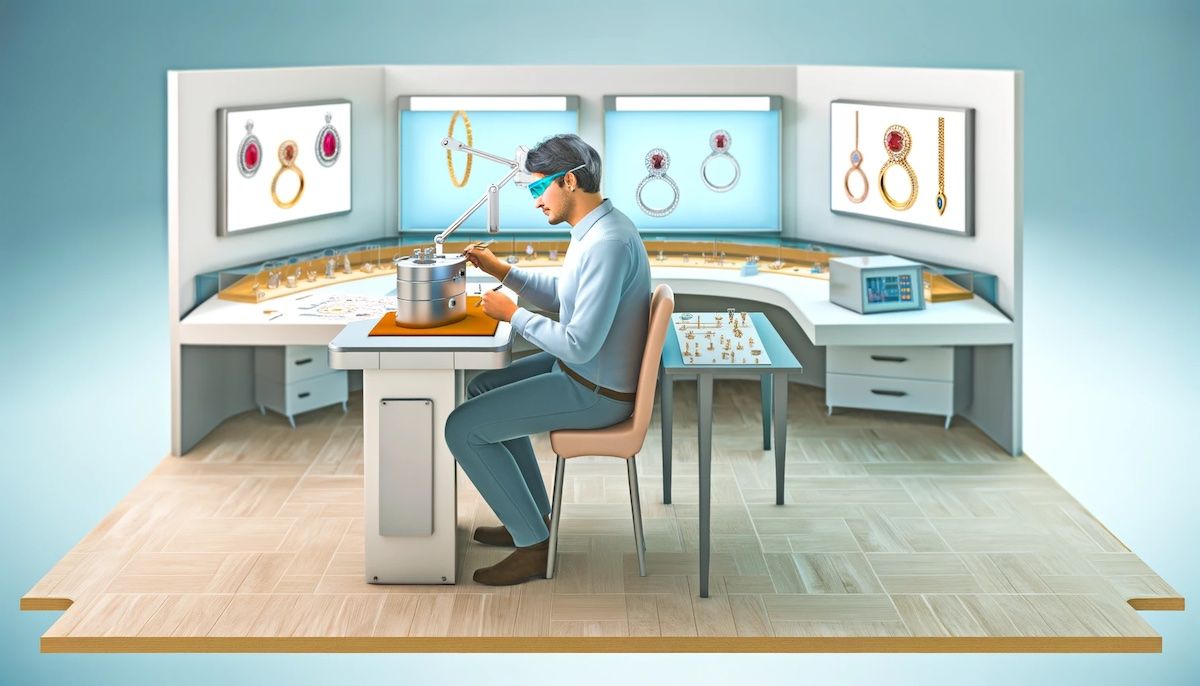
In the dazzling world of jewelry, the timeless allure of gold continues to captivate the hearts of many.
At the heart of transforming this precious metal into exquisite pieces of jewelry are goldsmiths, whose artistry and skill have been revered through the ages.
Today, the role of goldsmiths in the jewelry industry remains as significant as ever, merging ancient techniques with modern innovations to create pieces that are not only beautiful but also embody craftsmanship of the highest order.
This guide explores the enduring importance of goldsmiths in today’s jewelry industry, shedding light on their processes, the evolution of their craft, and their contribution to contemporary jewelry design.
The Timeless Craft of Goldsmithing
Goldsmithing is an art that has been refined over millennia, with techniques and knowledge passed down through generations.
Today’s goldsmiths are the custodians of this rich heritage, adept in both traditional methods and the latest technological advancements.
Historical Perspectives
The craft of transforming gold into wearable art has its roots in ancient civilizations, where gold, due to its lustrous beauty and resistance to tarnish, became the material of choice for creating symbols of power, religious artifacts, and personal adornments.
Each era and region contributed unique styles, techniques, and meanings to the craft, painting a vivid picture of goldsmithing’s evolution through the ages.
Tools of the Trade
The tools of the trade for goldsmiths, a blend of ancient implements and modern innovations, epitomize the craft’s rich history and its continuous evolution.
Traditional tools, such as hammers, anvils and files, have remained largely unchanged for centuries and they are still integral to the goldsmith’s bench.
These tools are not merely instruments of creation but extensions of the goldsmith’s hands, each serving a unique purpose in the transformation of raw gold into intricate jewelry.
Among the traditional tools, the jeweler’s saw is pivotal for cutting precise shapes out of metal sheets or wire, allowing for intricate designs that are the hallmark of fine jewelry.
The finesse with which a goldsmith wields the saw blade, often as thin as a hair, is a testament to their skill and precision.
However, modern goldsmiths also incorporate advanced technology, such as laser cutting and computer-aided design (CAD), into their work.
This blend of old and new allows for precision and creativity that was unimaginable in the past, as shown in “Accademia delle Arti Orafe Professional Goldsmithing and Fine Jewelry Course“.
Techniques and Processes
Goldsmithing involves a variety of techniques, from alloying and shaping to setting stones and polishing.
Each technique requires a deep understanding of the material properties and a meticulous approach to ensure the final piece meets the highest standards of quality and beauty.
These techniques, honed over centuries, involve a combination of physical manipulation, chemical treatment, and artistic insight, each contributing to the creation of pieces that are both structurally sound and aesthetically pleasing.
- Alloying is a foundational process in goldsmithing, where pure gold is mixed with other metals to enhance its durability and alter its color.
- Forging and annealing are critical in making gold more malleable. Forging involves hammering the gold into a desired shape, a process that can harden the metal and make it brittle.
- Soldering is a precise technique used to join different pieces of metal together. Unlike welding, soldering involves melting a filler metal—a solder—into the joint.
- Setting stones within gold jewelry is an art form in itself, demanding precision and a delicate touch.
Finishing techniques such as polishing and texturing are the final steps in the goldsmithing process, enhancing the jewelry’s appearance.
In particular:
- Polishing involves using progressively finer abrasives to achieve a high shine.
- Texturing techniques, such as brushing or hammering, create a variety of surface effects
The Fusion of Art and Technology
In the contemporary landscape, goldsmiths are at the intersection of age-old artistry and cutting-edge technology.
This fusion has opened up new possibilities in jewelry design and manufacturing.
The Role of CAD in Jewelry Design
Computer-aided design (CAD) software has revolutionized the way goldsmiths conceptualize and create their pieces.
The integration of Computer-Aided Design (CAD) into jewelry design has marked a revolutionary shift in how goldsmiths conceptualize and execute their creations.
This digital approach has not only streamlined the design process but has also opened up new avenues for creativity and precision that were previously unimaginable.
CAD software allows designers to create detailed 3D models of their jewelry pieces, offering a virtual preview that can be adjusted and perfected before any physical work begins.
Innovations in Material Science
Advancements in material science have introduced new alloys and treatments that expand the palette of goldsmiths.
These innovations not only offer new aesthetic options but also improve the durability and wearability of jewelry, meeting the demands of modern consumers.
Sustainability in Goldsmithing
As awareness of environmental and ethical issues grows, goldsmiths and the jewelry industry as a whole are embracing sustainable practices.
This includes the use of recycled materials, ethical sourcing of gemstones, and environmentally friendly manufacturing processes.
The commitment to sustainability is reshaping the industry, aligning the timeless appeal of gold jewelry with contemporary values.
The Cultural and Economic Impact of Goldsmiths
Goldsmiths play a crucial role in both the cultural significance and economic vitality of the jewelry industry.
Their creations are not merely adornments but are expressions of identity, tradition, and innovation.
Jewelry as Cultural Expression
Jewelry serves as a powerful medium of cultural expression, transcending its role as mere adornment to embody the beliefs, traditions, and values of societies.
Throughout history, jewelry has been imbued with symbolic significance, used to communicate status, affiliation, and personal identity.
As goldsmiths craft pieces that reflect the zeitgeist of their times, they participate in a dialogue between the past and present, weaving a narrative that is both personal and universal.
The Economic Contribution of Goldsmiths
Beyond their artistic contributions, goldsmiths are integral to the economy of the jewelry industry.
From small independent artisans to large luxury brands, the craftsmanship of goldsmiths drives demand and adds value to the raw materials, underscoring the economic importance of their skill and creativity.
Education and Mentorship
The future of goldsmithing depends on the transmission of skills and knowledge to new generations.
The significance of education and mentorship in the domain of goldsmithing cannot be overstated.
These elements are crucial for the perpetuation and evolution of the craft, ensuring that the accumulated knowledge, skills, and traditions are passed down through generations.
As the jewelry industry continues to evolve, the integration of contemporary techniques with traditional craftsmanship highlights the need for comprehensive educational programs and mentorship opportunities.
In this way, we will not only be able to preserve the heritage of goldsmithing, but also foster innovation and excellence within the field.
Goldsmithing: a timeless art
In conclusion, the role of goldsmiths in today’s jewelry industry is as vital as it has ever been.
Their ability to blend tradition with innovation not only keeps the ancient craft alive but also ensures that it remains at the forefront of artistic and technological advancements.
As we adorn ourselves with the creations of these skilled artisans, we carry forward a legacy of beauty, craftsmanship, and cultural significance that goldsmiths have been upholding for centuries.


