2cm is a small but commonly used unit of measurement in daily life, medical evaluations, crafting, and scientific research. Standing for 2 centimeters, it equals 20 millimeters or approximately 0.79 inches.
While it may appear minor, understanding what 2cm looks like is crucial in contexts like identifying skin growths, evaluating wounds, comparing object sizes, or understanding historical references like the 2CM Australian radio station.
Whether you’re visualizing 2cm on a ruler, on the skin, or trying to grasp how big a 2cm object really is, this guide helps decode the significance of this modest yet meaningful metric length.
2cm vs Inches: A Clear Comparison
The metric unit 2cm (2 centimeters) is often compared to the imperial system for practical understanding. In terms of conversion, 2cm to inches equals approximately 0.787 inches. This makes 2cm in inches, just under one full inch, which is about the width of a standard thumb.
If you’re wondering about 2cm into inches, the formula is: centimeters divided by 2.54. This comparison is useful in tailoring, DIY projects, and shopping online from different countries.
Since the United States often uses inches, knowing how 2cm converts helps avoid measurement mistakes. Whether you’re buying jewelry, clothing, or tech gadgets, understanding how 2cm fits into the imperial system ensures better accuracy. So next time you’re measuring or shopping internationally, remember: 2cm in inches is close to three-quarters of an inch.


Is 2cm enough for a Wound? Medical Measurement Guide
A 2cm wound might not seem large at first glance, but in medical terms, it can be significant depending on depth, location, and cause. A 2cm cut or laceration is roughly the width of a U.S. penny or the length of a staple. If the wound is shallow, it may heal with proper cleaning and a basic bandage.
However, if the 2cm wound is deep, gaping, or bleeding excessively, medical attention is necessary. It may require stitches or surgical glue, especially if it’s located on high-movement areas like knees, elbows, or fingers. 2cm is also a common size used in surgical notes, such as for skin biopsies or incision planning.
Always monitor a 2cm wound for signs of infection, including redness, swelling, or discharge, and seek care if healing doesn’t progress within a few days.
What Does 2cm Look Like on Skin or Body
Visualizing 2cm on the skin or body can help with everyday health tracking. A 2cm mole, freckle, or scar is about the diameter of a shirt button or the length of a fingernail. Doctors use 2cm as a threshold in dermatology when examining skin lesions or tracking changes in body marks.
For example, a mole over 2cm with irregular borders or color changes may warrant a biopsy. Similarly, a healing scar that reaches 2cm could reflect trauma or surgical history.
On fingers, 2cm spans about one finger segment, which helps people understand scale without a ruler. Whether monitoring a skin tag, acne cyst, or post-surgical scar, 2cm offers a medical benchmark for identifying when further evaluation may be necessary.
2cm Growth: What It Means in Tumors, Cysts, or Nodules
In medical diagnostics, a 2cm growth—whether it’s a tumor, cyst, or nodule—is often a critical size threshold. A 2cm tumor may be considered small in some cancers (like breast or thyroid), but still significant enough to need a biopsy or further imaging.
In radiology reports, when a 2cm mass appears on a CT or MRI scan, doctors assess its shape, borders, and internal structure to decide the next steps. 2cm is also used in classification systems, such as in thyroid nodules (TI-RADS) or liver lesions.
While some 2cm cysts may be benign and fluid-filled, others may require removal or monitoring depending on symptoms and risk factors. Early detection of a 2cm growth allows for better outcomes, which is why regular checkups and understanding this size benchmark are important.
2CM Radio Station: Australia’s Broadcasting Pioneer
Not all references to 2CM are about measurement—2CM was also a historic Australian radio station that revolutionized broadcasting. Operated by Charles Dansie Maclurcan, 2CM began transmissions in 1921 and is recognized as the first Australian station to regularly broadcast both music and talk.
At a time when radio was still in its infancy, Maclurcan’s passion and technical skill turned 2CM into a cultural milestone, predating the launch of national services like the ABC. The station’s experimental license allowed it to explore uncharted territory in wireless communication.
2CM not only entertained Australians but also helped lay the foundation for modern media and public broadcasting. Its legacy remains a remarkable example of how innovation and passion can create lasting national impact—even when the name is as simple as “2CM.”

How Much Is 2cm in Feet
To convert 2cm to feet, we use the fact that one foot equals 30.48 centimeters. When calculated, 2cm equals approximately 0.0656 feet. That’s a tiny measurement—not even close to a tenth of a foot! This unit is helpful when working on large projects like flooring or carpentry, where even the smallest measurements can make a big difference.
For visual clarity, imagine a grain of rice—it’s roughly 1.5 to 2cm long. Knowing how 2cm translates to feet is essential for construction, interior design, or engineering tasks, especially when dealing with precise specifications.
So if you’re measuring a small gap, edge, or border and it says 2cm, understand that in feet, it’s barely over half an inch and less than a toe’s length.
Is 2cm Big or Small? Everyday Object Examples
At first glance, 2cm may seem insignificant, but when compared to everyday objects, it takes on practical meaning. For instance, a standard pencil’s eraser cap is around 2cm wide. Coins such as the U.S. penny or euro cent are very close to 2cm in diameter.
Small buttons on shirts, SIM cards, and even the diameter of a marble are examples of objects that measure about 2cm. While it’s not a large unit, 2cm is often used in tailoring, design, and arts and crafts.
If you’re working with small electronics or miniature models, 2cm can be quite substantial. So yes, 2cm is small, but it’s not negligible—it represents a clear and functional measurement for various daily uses.
Adam Rosenfeld Net Worth: How Much Does He Make
2cm in mm: Accurate Metric Conversion
The metric system makes converting units incredibly straightforward. Since 1 centimeter equals 10 millimeters, 2cm in mm equals exactly 20 millimeters. Similarly, 2cm into mm doesn’t require a calculator—just multiply by 10.
This conversion is critical in fields like science, medicine, and manufacturing where high precision is required. For example, when designing mechanical parts or diagnosing medical conditions, even a 2cm shift or gap (equal to 20mm) can have big consequences.
Visualizing 2cm in mm also helps when working with detailed blueprints or small-scale models. By converting 2cm into mm, you can ensure your measurements are both precise and universally understood within metric-based professions.
What is 2cm in fractions and Decimals
Converting 2cm into fractions and decimals is useful, especially when working in imperial units. 2cm to inches fraction is approximately 25/32 of an inch, which is just a bit less than one full inch. In decimal form, 2cm in inches equals 0.7874.
When precision is key—such as in engineering, woodworking, or tailoring—knowing the fractional and decimal equivalents of 2cm helps avoid errors. If someone asks, “What is 2cm in a fraction?” you now know it’s close to 25/32.
Whether you’re cutting fabric, measuring space, or designing parts, being able to switch easily between units ensures seamless communication and accurate output.
2cm of Rain Meaning: What Does It Mean
When a weather report mentions 2cm of rain, it refers to the depth of rainfall collected over a flat surface. In simple terms, 2cm of rain means that 20 millimeters of water have fallen, which is a moderate amount.
It may not sound like much, but 2cm of rain can indicate significant precipitation, especially in dry areas. This measurement is used by meteorologists to gauge storm intensity and forecast flooding risks.
For context, lawns and gardens need about 2.5cm of water weekly, so 2cm of rain in a single day could saturate the soil. Understanding this measurement is vital for farmers, gardeners, and city planners who rely on rainfall data.
Understanding 2cm in Pregnancy
In medical terms, 2cm dilated means the cervix has opened 2 centimeters during labor. It’s an early stage in childbirth, and it doesn’t necessarily mean labor will progress quickly.
2cm in pregnancy is often monitored by doctors to track labor progression. Some women may remain at 2cm dilation for hours or even days before active labor begins. This measurement is key for obstetricians in making decisions about hospital admission, pain management, and labor strategies.
While 2cm may seem small, in pregnancy, it marks the beginning of one of the most important journeys—birth. It’s a signal that the body is preparing, even if there’s more time to go.
2cm in Ring Size: What Size Ring Is 2cm
If you measure the internal diameter of a ring and it’s 2cm, you’re likely looking at a ring size close to a US size 10. 2cm in ring size is about 20 millimeters, which is a common medium to large size.
In UK sizes, this would correspond to around size T ½. Knowing 2cm in ring size helps when shopping online, especially on international sites.
It’s also handy if you’re buying a surprise gift and only have access to measure the ring directly. A printable ring chart or ring sizer can help confirm if 2cm is the correct fit. Always double-check conversions when buying precious or custom rings.
2cm Circle Dimensions & Use Cases
A 2cm circle has a diameter of 2 centimeters and a radius of 1 centimeter. This small yet precise size is often used in arts, crafts, logo stamps, or jewelry design. The area of a 2cm circle is about 3.14 square centimeters. Designers may use this for stickers, pins, buttons, or engraving patterns.
Crafters also use 2cm circles in scrapbooking or making earring studs. In industrial design, even such a tiny circle can play a role in layout blueprints or product design elements. Despite its small size, a 2cm circle can be highly functional in creative and commercial settings.
What Does a Ruler Say About 2cm
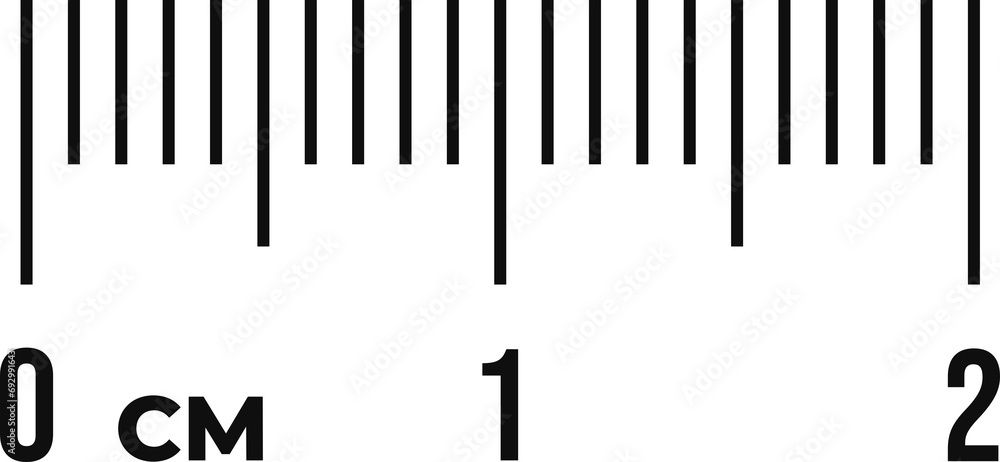
When using a standard metric ruler, the 2cm is marked clearly after the 1cm mark. It’s equivalent to 20mm and is often the length of two small grid blocks. Students, designers, and tailors frequently use a ruler 2cm to measure small distances or draw lines.
A physical ruler makes the concept of 2cm tangible—especially useful in education and project planning.
By visually seeing 2cm on a ruler, users get a better sense of its real-world size. Whether it’s marking fabric, drawing on paper, or measuring a gap, a ruler 2cm is a trusted and universal reference.


Is 2cm Enough? Common Uses You Didn’t Know About
Surprisingly, 2cm shows up in more places than you think. Ear piercings, for example, are often measured in 2cm gauges. Some pills and tablets are nearly 2cm long. Many tech gadgets have screen bezels or camera lenses close to 2cm in width.
In clothing, 2cm is used for spacing buttons or creating collar gaps. It also appears in baking tools, nuts and bolts, or small USB devices. Despite its size, 2cm is big enough to be meaningful but small enough for fine-tuned design. Its flexibility makes 2cm one of the most commonly used measurements in precision-focused industries.
2cm vs 1 Inch vs 1mm: The Ultimate Size Faceoff
Let’s compare 2cm vs 1 inch vs 1mm side by side. 2cm equals about 0.787 inches, making it slightly smaller than 1 inch. On the other hand, 1mm is just one-tenth of a centimeter, so 2cm equals exactly 20mm. Think of 1mm as a grain of salt, 2cm as a thumb width, and 1 inch as a U.S. quarter.
This visual comparison helps make sense of abstract units. If you’re confused between metric and imperial systems, just remember: 2cm is the perfect in-between. It’s bigger than tiny 1mm but just shy of a full inch, offering the best of both worlds.
Angela Halili Height: The Truth You Need to Know
Top 10 Things That Are Around 2cm Long
Want to visualize 2cm better? Here are 10 everyday items roughly 2cm in length:
- U.S. penny
- Shirt button
- Pencil eraser
- LEGO brick height
- SIM card
- Standard staple
- Small key
- Dice edge
- Watch crown
- Zipper tab. These examples bring 2cm to life in the most relatable way. When you hold these objects, you’re holding the practical impact of 2cm in the palm of your hand. Whether in design, fashion, or everyday use, knowing how 2cm looks and feels makes measurement more intuitive and user-friendly.
Frequently Asked Questions about 2cm
How big is 2cm compared to an inch?
2cm is approximately 0.79 inches, slightly less than a full inch.
What objects are around 2cm in size?
A shirt button, a cherry, or the width of a fingernail are all roughly 2cm wide.
Is a 2cm wound serious?
A 2cm wound may require medical attention, especially if deep or bleeding. It could need stitches.
What does a 2cm tumor mean?
A 2cm tumor is moderate in size and may require further testing or treatment, depending on its type.
How do I measure 2cm without a ruler?
You can use a coin, fingernail, or compare it to the width of two pencil erasers side by side.
Conclusion of 2cm
Despite being just a fraction of a meter, 2cm holds significant meaning across various domains. From helping doctors measure wounds and tumors to aiding students and DIYers with precise sizing, 2cm plays a practical role in everyday understanding.
It’s also tied to history, with the 2CM radio station marking a breakthrough in Australian broadcasting. Visualizing 2cm can enhance awareness—whether it’s the size of a coin, scar, or object.
Its usage in measurements, medical fields, and even historical references proves that small distances can carry big importance. Understanding 2cm helps bridge gaps in knowledge, health, and perspective in a metric-based world.